“the strongest principle of growth lies in human choice. The sons of Judah have to choose that God may again choose them. The Messianic time is the time when Israel shall will the planting of the national ensign. The Nile overflowed and rushed onward: the Egyptian could not choose the overflow, but he chose to work and make channels for the fructifying waters, and Egypt became the land of corn. Shall man, whose soul is set in the royalty of discernment and resolve, deny his rank and say, I am an onlooker, ask no choice or purpose of me? That is the blasphemy of this time. The divine principle of our race is action, choice, resolved memory. Let us contradict the blasphemy, and help to will our own better future and the better future of the world--not renounce our higher gift and say, 'Let us be as if we were not among the populations;' but choose our full heritage, claim the brotherhood of our nation, and carry into it a new brotherhood with the nations of the Gentiles. The vision is there; it will be fulfilled.”
Quote by George Eliot
Work
Daniel Deronda is a complex narrative that intertwines the lives of its characters with the broader social and political context of the time. The story follows Daniel, a young man raised by a Jewish family, as he navigates his identity and relationships amidst the backdrop of the British Empire's expansion and the rise of Zionism. more
Author
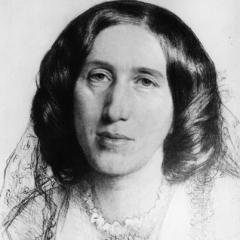
George Eliot, born Mary Ann Evans, was a renowned 19th-century British novelist. Her works are known for their profound psychological insights and critical exploration of social issues. With her unique narrative techniques and rich emotional expression, she has had a profound impact on literature. more
You May Also Like
“Prayers bring comfort, not change. Change requires tangible human efforts.”
“I could taste the salt on her lips, each kiss like a summer wave breaking on an empty beach.”
“Human progress isn't measured by industry, it's measured by the value you put on a life.”