“What I know, what is certain, what I cannot deny, what I cannot reject—this is what counts. I can negate everything of that part of me that lives on vague nostalgias, except this desire for unity, this longing to solve, this need for clarity and cohesion. I can refute everything in this world surrounding me that offends or enraptures me, except this chaos, this sovereign chance and this divine equivalence which springs from anarchy. I don’t know whether this world has a meaning that transcends it. But I know that I do not know that meaning and that it is impossible for me just now to know it. What can a meaning outside my condition mean to me? I can understand only in human terms. What I touch, what resists me—that is what I understand. And these two certainties—my appetite for the absolute and for unity and the impossibility of reducing this world to a rational and reasonable principle—I also know that I cannot reconcile them.”
Quote by Albert Camus
Author
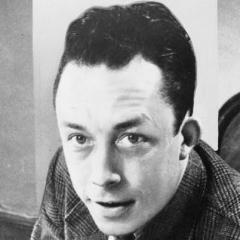
Albert Camus
Albert Camus was a French author and philosopher, born on November 7, 1913, and died on January 4, 1960. Known for his unique existentialist philosophy and profound insights into human suffering, Camus' works include 'The Stranger', 'The Plague', and 'The Myth of Sisyphus', which have had a profound impact on 20th-century literature. more
You May Also Like
Source: The Myth of Sisyphus and Other Essays
Source: The Myths of Sisphus and Other Essays
Source: The Myth of Sisyphus and Other Essays
“Knowing whether or not man is free involves knowing whether he can have a master.”
Source: The Myth of Sisyphus and Other Essays
“For in the presence of God there is less a problem of freedom than a problem of evil.”
Source: The Myth of Sisyphus and Other Essays
“The loves we share with a city are often secret loves.”
Source: Summer in Algiers
Source: The Myth of Sisyphus and Other Essays
Source: The Myth of Sisyphus and Other Essays