Quotessence
Home / Quotes / Quote by Thomas Merton

Quote by Thomas Merton

“We must be willing to accept the bitter truth that, in the end, we may have to become a burden to those who love us. But it is necessary that we face this also. The full acceptance of our abjection and uselessness is the virtue that can make us and others rich in the grace of God. It takes heroic charity and humility to let others sustain us when we are absolutely incapable of sustaining ourselves. We cannot suffer well unless we see Christ everywhere, both in suffering and in the charity of those who come to the aid of our affliction.”

Quote by Thomas Merton

Work

No Man Is an Island

This book is a profound exploration of individuality and its relationship to society. It delves into the idea that no person is an island, emphasizing the necessity of human connection and the impact of community on personal identity and well-being. more

Author

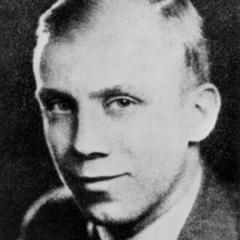
Thomas Merton
Thomas Merton

Thomas Merton (January 31, 1915 - December 10, 1968) was an American writer, poet, social critic, and mystic. His works covered a wide range of topics including philosophy, religion, and social justice, and were highly appreciated by readers. more

You May Also Like

“The Sunlight on the Garden The sunlight on the garden Hardens and grows cold, We cannot cage the minute Within its nets of gold, When all is told We cannot beg for pardon. Our freedom as free lances Advances towards its end; The earth compels, upon it Sonnets and birds descend; And soon, my friend, We shall have no time for dances. The sky was good for flying Defying the church bells And every evil iron Siren and what it tells: The earth compels, We are dying, Egypt, dying And not expecting pardon, Hardened in heart anew, But glad to have sat under Thunder and rain with you, And grateful too For sunlight on the garden.”

“After some cogitation, it is difficult not to agree with Herman Bondi (1919 - 2005), who in his book 'Relativity and Common Sense' says: ... The surprising thing, surely, is that molecules in a gas behave so much as billiard balls, not that electrons behave so little like billiard balls.”