Quotessence
Home / Quotes / Quote by Philip K. Dick

Quote by Philip K. Dick

“That's what it means to die, to not be able to stop looking at whatever's in front of you. Some darn thing placed directly there, with nothing you can do about it...”

Quote by Philip K. Dick

Work

A Scanner Darkly

Pulitzer Prize-winning author Philip K. Dick crafts a gripping narrative set in a dystopian future where reality is blurred by drug-induced delusions. The story follows an undercover agent, Bob Arctor, as he struggles to maintain his identity and sanity while navigating a world dominated by drug addiction. more
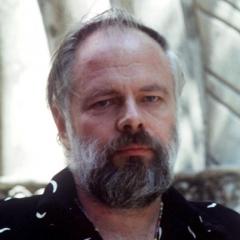
Author

Philip K. Dick
Philip K. Dick

Philip K. Dick was an American science fiction novelist known for his unique philosophical thinking and profound futuristic imagination. His works often explore the boundaries between individuals and society, reality and illusion, and have had a profound impact on science fiction literature. more

You May Also Like

“After some cogitation, it is difficult not to agree with Herman Bondi (1919 - 2005), who in his book 'Relativity and Common Sense' says: ... The surprising thing, surely, is that molecules in a gas behave so much as billiard balls, not that electrons behave so little like billiard balls.”

“Dying was nothing and he had no picture of it nor fear of it in his mind. But living was a field of grain blowing in the wind on the side of a hill. Living was a hawk in the sky. Living was an earthen jar of water in the dust of the threshing with the grain flailed out and the chaff blowing. Living was a horse between your legs and a carbine under one leg and a hill and a valley and the hills beyond.”

“With a sigh, he grabbed hold of his chair and lifted himself out of it, then wrote on the blackboard: How will we ever get out of this labyrinth of suffering? - A.Y. 'I'm going to leave that up for the rest of the semester,' he said. 'Because everybody who has ever lost their way in life has felt the nagging insistence of that question. At some point we all look up and realize we are lost in a maze, and I don't want us to forget Alaska, and I don't want to forget that even when the material we study seems boring, we're trying to understand how people have answered that question and the questions each of you posed in your papers--how different traditions have come to terms with what Chip, in his final, called 'people's rotten lots in life.”