Quotessence
Home / Quotes / Quote by Alexander Schmemann

Quote by Alexander Schmemann

“In the Orthodox ecclesial experience and tradition a sacrament is understood primarily as a revelation of the genuine nature of creation, of the world, which, however much it has fallen as "this world," will remain God's world, awaiting salvation, redemption, healing and transfiguration in a new earth and a new heaven. In other words, in the Orthodox experience a sacrament is primarily a revelation of the sacramentality of creation itself, for the world was created and given to man for conversion of creaturely life into participation in divine life. If in baptism water can become a "laver of regeneration," if our earthy food - bread and wine - can be transformed into partaking of the body and blood of Christ, if with oil we are granted the anointment of the Holy Spirit, if, to put it briefly, everything in the world can be identified, manifested and understood as a gift of God and participation in the new life, it is because all of creation was originally summoned and destined for the fulfillment of the divine economy - "then God will be all in all.”

Quote by Alexander Schmemann

Work

The Eucharist: Sacrament of the Kingdom

This book delves into the significance of the Eucharist, examining its historical development, theological implications, and its role in the lives of believers. It provides an in-depth analysis of the sacrament's symbolism, rituals, and its representation as a sign of the Kingdom of God. more

Author
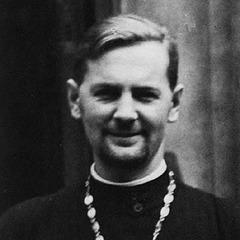
Alexander Schmemann
Alexander Schmemann

Alexander Schmemann was a prominent Orthodox theologian and writer, born on September 13, 1921, and died on December 13, 1983. He had a profound impact on the field of Orthodox theology with his deep understanding of Christian doctrine and history. more

You May Also Like

“We believe some people are more special, more beautiful, more capable, more influential, more intelligent, more gifted, and have a greater capacity for good than others, often based on material possessions and outer appearances. At the root, that is why we are engaged in a struggle now in the Congress led by one group of people who truly believes their role is to defend the privileges of the elite. They defend tax breaks for the rich and ask for trillions in cuts to the safety nets that protect the middle class, the elderly, the sick, and the poor, because, in essence, they believe one group is more important than the other, more deserving than the other, and one contributes more good than the other. This is actually an illusion that is blind to the interdependence of the entire creation, which unites the weak with the strong, the privileged with the poor, and the ugly with the beautiful. All the inequities of our world are basically attempts to actualize this erroneous belief. And that is why there is turmoil, because we are in conflict with the truth, working to manifest an idea that is false.”

“No, I'd better not speak of it. It's a secret for me alone, of vital importance for me, and not to be put into words. This new feeling has not changed me, has not made me happy and enlightened all of a sudden as I dreamed. Just like the feeling for my child, there was no surprise in this either. Faith—or not faith—I don't know what it is—but this feeling has come just as imperceptibly through suffering, and has taken firm root in my soul. I shall go on in the same way, losing my temper with Ivan the coachman, falling into angry discussions, expressing my opinions tactlessly. There will be still the same wall between the holy of holies of my soul and other people, even my wife. I shall still go on scolding her for my own terror, and being remorseful for it. I shall still be as unable to understand with my reason why I pray, and I shall still go on praying. But my life now—my whole life apart from anything that can happen to me—every minute of it—is no more meaningless as it was before, but has the positive meaning of goodness, which I have the power to put into it.”

“I'm reminded of a conversation between a little girl and her mother as they walked out of church. The mother asked her how she liked church that day. The girl replied that she thought it was good, but that she was a little confused. "The pastor said that God was bigger than we are. Is that true?" she asked. The mother responded that it was indeed true. "He also said that God lives inside of us. Is that true, Mommy?" Again the mother replied, "Yes." "Well, then," said the girl, "if God is bigger than us, and if He lives inside of us, then shouldn't some of Him show through?”