Quotessence
Home / Quotes / Quote by Karl Pearson

Quote by Karl Pearson

“The classification of facts, the recognition of their sequence and relative significance is the function of science, and the habit of forming a judgment upon these facts unbiased by personal feeling is characteristic of what may be termed the scientific frame of mind.”

Quote by Karl Pearson

Work

The Grammar of Science

This book delves into the foundational elements of scientific discourse, exploring the syntax, vocabulary, and conventions that shape scientific writing and communication. It provides insights into the construction of scientific arguments, the use of evidence, and the presentation of research findings. The Grammar of Science is intended for students, researchers, and anyone interested in understanding the language of science. more

Author
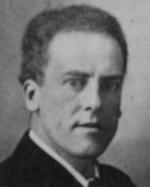
Karl Pearson
Karl Pearson

Karl Pearson, born on March 27, 1857 and died on April 27, 1936, was a renowned British mathematician and statistician, often hailed as one of the founders of modern statistics. He made significant contributions to the fields of statistics, biometry, and genetics, particularly in the development of concepts and methods such as correlation coefficients, regression analysis, and hypothesis testing. more

You May Also Like

“The publication of the Darwin and Wallace papers in 1858, and still more that of the 'Origin' in 1859, had the effect upon them of the flash of light, which to a man who has lost himself in a dark night, suddenly reveals a road which, whether it takes him straight home or not, certainly goes his way. That which we were looking for, and could not find, was a hypothesis respecting the origin of known organic forms, which assumed the operation of no causes but such as could be proved to be actually at work. We wanted, not to pin our faith to that or any other speculation, but to get hold of clear and definite conceptions which could be brought face to face with facts and have their validity tested. The 'Origin' provided us with the working hypothesis we sought.”

“Such is the strange situation in which modern philosophy finds itself. No former age was ever in such a favourable position with regard to the sources of our knowledge of human nature. Psychology, ethnology, anthropology, and history have amassed an astoundingly rich and constantly increasing body of facts. Our technical instruments for observation and experimentation have been immensely improved, and our analyses have become sharper and more penetrating. We appear, nonetheless, not yet to have found a method for the mastery and organization of this material. When compared with our own abundance the past may seem very poor. But our wealth of facts is not necessarily a wealth of thoughts. Unless we succeed in finding a clue of Ariadne to lead us out of this labyrinth, we can have no real insight into the general character of human culture; we shall remain lost in a mass of disconnected and disintegrated data which seem to lack all conceptual unity.”

“Do you want to achieve something or do you just want to make money?” asked a nearby man in a white shirt to another man in a striped shirt. I waited for the answer as I slowly walked past them. “Why is it an either or question?” the man in the striped shirt finally murmured philosophically under a sip of beer. They both stood there looking at each other in thought.”