Quotessence
Home / Quotes / Quote by Antonio Porchia

Quote by Antonio Porchia

Work

Voices

This book compiles a series of short stories that delve into diverse subjects and storytelling techniques, offering readers a rich tapestry of literary experiences. more

Author

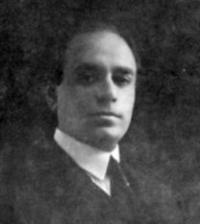
Antonio Porchia
Antonio Porchia

Antonio Porchia, born on November 13, 1885, was an Argentine poet whose work is renowned for its unique style and profound philosophy. He had a significant impact on Latin American literature. more

You May Also Like

“In a world where nothing exists by itself, where every division of one thing from another is a misperception - or misconception - of the way things really are, there are no eyes, ears, nose, tongue, body, or mind. We cannot, for example, draw a line around the eyes that is not necessarily arbitrary. There is no point at which the eyes begin or end, either in time or in space or conceptually. The eye bone is connected to the face bone, and the face bone is connected to the head bone, and the head bone is connected to the neck bone, and so it goes down to the toe bone, the floor bone, the earth bone, the worm bone, the dreaming butterfly bone. Thus, what we call our eyes are so many bubbles in a sea of foam. This is not only true of our eyes but of our other powers of sensation as well, including the mind.”

“For Persons are selves and, in one respect at least, I was now a Not- self, simultaneously perceiving and being the Not-self of the things around me. To this new-born Not- self, the behavior, the appearance, the very thought of the self it had momentarily ceased to be, and of other selves, its one-time fellows, seemed not indeed distasteful (for distastefulness was not one of the categories in terms of which I was thinking), but enormously irrelevant.”

“To seek the self, one must first have a clear idea of what one is looking for. Thus, some meditation manuals advise actively cultivating the sense of self, despite the fact that this sense is the target of the analysis. Our sense of identity is often vaguely felt. Sometimes, for example, we identify with the body, saying, "I am sick." At other times, one is the owner of the body, "My stomach hurts." It is said that by imagining a moment of great pride or imagining a false accusation, a strong and palpable sense of the "I" appears in the center [of] the chest: "I did it," or, "I did not do that." This sense of self is to be carefully cultivated, until one is convinced of its reality. One then sets out to find this self, reasoning that, if it exists, it must be located somewhere in the mind or the body.”

“But where in all of this description is the essential chair? Have we yet come even close to a full description of it? Did we even mention that several hundred years ago, it wasn't a chair but a tree? Where is it now? Here? Or in memory. We cannot even fully describe a chair and yet we say "I am." "I am...". Understand. There is no "I am." Nothing "is." Try to describe all that you are. Simultaneously discern the logical flaw in what I've just said. Now! Feel the white flame.”

“The fundamental principal when traversing a spiritual path is that we do not have a mind. The mind has created the sense of you and me from the way it perceives reality. The truth is, the mind holds us within it. We are not the possessor of a mind and the mind is not something happening to us as if we were outside looking in. We are a part of the mental processing of the mind. The thoughts of the mind and the sense of 'I' are not two separate events. We exist only because the mind thinks us into creation.”

“The deepest level of obsession is obsession with a sense of self. A sense of self, generated as a reaction to non-referential space, lies at the core of every habituated pattern. A self is felt to be a permanent, independent unit. The feeling of permanence manifests in life as a feeling of dullness, of not being quite present. The illusion of independence arises as a feeling of separation. The feeling of being one thing arises as a feeling of incompleteness or dissatisfaction. Together, these three qualities obscure the mystery of being.”