Quotessence
Home / Quotes / Quote by F. Scott Fitzgerald

Quote by F. Scott Fitzgerald

“That we shall use every discovery of science in the preservation of our children's health goes without saying; but we shall do more than this - we shall give them a free start, not loading them up with our own ideas and experiences, nor advising them to live according to our lights. We were burned in the fire here and there, but - who knows? - fire may not burn our children, and if we warn them away from it they may end by never growing warm. We will not even inflict our cynicism on them as the sentimentality of our fathers was inflicted on us. The most we will do is urge a little doubt, asking that the doubt be exercised on our ideas as well as on all the mortal things in this world.”

Quote by F. Scott Fitzgerald

Work

A Short Autobiography

Browse quotes and source details for this work. more

Author
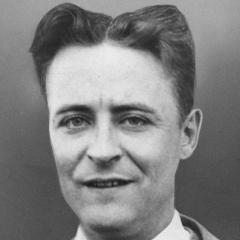
F. Scott Fitzgerald
F. Scott Fitzgerald

F. Scott Fitzgerald was an American author of novels and short stories, renowned for his works that encapsulate the Jazz Age and the Roaring Twenties. His most celebrated novel, 'The Great Gatsby,' is a critical and commercial success, reflecting the themes of the American Dream and the decline of the American upper class. more

You May Also Like

“After my parents were dead, I found in a box and in two chests of drawers nothing but hundreds of bright red Alpine caps, I said, nothing but bright red Alpine stockings. Every one of them knitted by my mother. My parents could have gone into the High Alps with these bright red caps and bright red stockings for thousands of years. I burnt every one of those bright red caps and bright red stockings, I said. I put on one of my mother's hundreds of bright red Alpine caps and in this costume burnt all the others, laughing, laughing, continuously laughing, I said. (Goethe Dies, p.65)”

“As children inch their way into adolescence, the parent changes. He is an authority, a source of answers, and a chastising voice. Depending on the day, he may be resented, emulated, questioned, or defied. Only as an adult can a child imagine his parent as a whole person, as a husband, a brother, or a son. Only then can a child see how his parent fits into the world beyond four walls. Saleem had only bits and pieces of his father, mostly the memories of a young boy. He would spend the rest of his life, he knew, trying to reconstruct his father with the scraps he could recall or gather from his mother.”

“What is the matter with people?” Sam fumed. “I said we needed a hundred kids and we get thirteen? Fifteen, maybe?” “They’re just kids,” Astrid said. “We’re all just kids. We’re all going to be very hungry kids.” “They’re used to being told what to do by their parents or teachers. You need to be more direct. As in, Hey, kid, get to work. Now.” She thought for a moment then added, “Or else.” “Or else what?” Sam asked. “Or else…I don’t know. We’re not going to let anyone starve. If we can help it. I don’t know the ‘or else.’ All I know is you can’t expect kids to just automatically behave the right way. I mean, when I was little my mom would give me a gold star when I was good and take away a privilege when I wasn’t.” “What am I supposed to do? Tell three hundred kids spread out in seventy or eighty different homes that they can’t watch DVDs? Confiscate iPods?” “It’s not easy playing daddy to three hundred kids,” Astrid admitted. “I’m not anyone’s daddy,” Sam practically snarled. Another sleepless night, in a long string of them, had left him in a foul mood. “I’m supposed to be the mayor, not the father.” “These kids don’t know the difference,” Astrid pointed out. “They need parents. So they look to you. And Mother Mary. Me, even, to some extent.”