Quotessence
Home / Quotes / Quote by G. Edward Griffin

Quote by G. Edward Griffin

“usually this starts out as an inefficient dictatorship, but by the time they get the U.N. money, it ends up as an efficient dictatorship”

Quote by G. Edward Griffin

Author
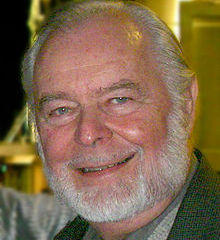
G. Edward Griffin
G. Edward Griffin

G. Edward Griffin is a renowned film producer, born on November 7, 1931. He has extensive experience in the film industry and has been involved in the production of many notable works. more

You May Also Like

“According to Robert S. McNamara, former president of the World Bank, without firm action to further reduce the population growth rate, world population will not stabilize below eleven billion. "At the national level," states McNamara, "rapid population growth translates into a steadily worsening employment future, massive city growth, pressure on food supplies, degradation of the environment, an increase in the number of 'absolute poor,' and a stimulus to authoritarian government.”

“This book is an essay in what is derogatorily called "literary economics," as opposed to mathematical economics, econometrics, or (embracing them both) the "new economic history." A man does what he can, and in the more elegant - one is tempted to say "fancier" - techniques I am, as one who received his formation in the 1930s, untutored. A colleague has offered to provide a mathematical model to decorate the work. It might be useful to some readers, but not to me. Catastrophe mathematics, dealing with such events as falling off a height, is a new branch of the discipline, I am told, which has yet to demonstrate its rigor or usefulness. I had better wait. Econometricians among my friends tell me that rare events such as panics cannot be dealt with by the normal techniques of regression, but have to be introduced exogenously as "dummy variables." The real choice open to me was whether to follow relatively simple statistical procedures, with an abundance of charts and tables, or not. In the event, I decided against it. For those who yearn for numbers, standard series on bank reserves, foreign trade, commodity prices, money supply, security prices, rate of interest, and the like are fairly readily available in the historical statistics.”

“As Thorstein Veblen correctly surmised over a century ago, the failure of economics to become an evolutionary science is the product of the optimizing framework of the underlying paradigm, which is inherently antithetical to the process of evolutionary change. This is the primary reason why the neoclassical mantra that the economy must be perceived as the outcome of the decisions of utility-maximizing individuals must be squarely rejected.”

“An essential pedagogic step here is to relegate the teaching of mathematical methods in economics to mathematics departments. Any mathematical training in economics, if it occurs at all, should come after students have at the very least completed course work in basic calculus, algebra and differential equations (the last being one about which most economists are woefully ignorant). This simultaneously explains why neoclassical economists obsess too much about proofs and why non-neoclassical economists, like those in the Circuit School, experience such difficulties in translating excellent verbal ideas about credit creation into coherent dynamic models of a monetary production economy.”

“Neoclassical economics has effectively insulated itself from the great advances made in science and engineering over the last 40 years. This self-imposed isolation must come to an end. For while the concepts of neoclassical economics appear difficult, they are actually quaint in comparison to the sophistication evident in today's mathematics, engineering, computing, evolutionary biology and physics. In order to advance, economics must humbly submit to learning from disciplines that it has studiously ignored for so long. Some researchers in outside fields have called for the wholesale replacement of standard economics curricula, using at least the building blocks of modern thought inherent in other disciplines.”

“When welfare is discussed in microeconomics textbooks, it is only in the domain of economic exchange in markets. The discussion in such places sets total welfare maximization as the virtuous end or criterion. In first-degree price discrimination adopted by a monopolist, there is no welfare loss. However, there is no consumer surplus either despite having optimal efficiency. Economics is neutral between desirable or undesirable equilibrium from the point of view of equity.”