Quotessence
Home / Quotes / Quote by Brian Selznick

Quote by Brian Selznick

Work

The Invention of Hugo Cabret

This book is a richly illustrated novel that intertwines the story of Hugo, an orphan living in the walls of a Paris train station, with the mysteries surrounding a broken automaton and the life of a reclusive film director. It explores themes of loss, discovery, and the power of storytelling. more

Author
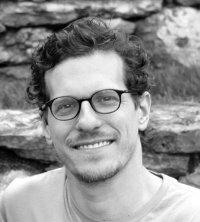
Brian Selznick
Brian Selznick

Born on July 14, 1966, Brian Selznick is a renowned illustrator. His works are known for their unique style and emotional expression, which have won him great popularity among readers. more

You May Also Like

“The Dream Attack & Daydream Fictions is a unique work that blends scientific rigor with philosophical depth and literary aesthetics, leading the reader on an unconventional journey. From a reader's perspective, this book is not merely a collection of stories but a thought experiment exploring the intersection of ontological astrophysics, topology, and consciousness. The work questions the thin, permeable boundary between dreams and reality through eight interconnected stories. The author’s background as a physicist lends scientific weight to concepts like "topological relationships" and "connectionist integrity," while masterfully exploring the transitions between Mythos and Logos. In stories such as "Trojan 137" and "The Scarlet Letter," time and consciousness are constructed as intricate labyrinths. Each narrative is an ideal plane placed in the realm of reality.”

“This gathering, this dwelling place where they slept now, heaped together, was only one, a relatively small one, of many. It was a small subcolony of dream-givers. Every human population has countless such colonies—invisible always—of these well-organized, attentive, and hard-working creatures who move silently through the nights at their task. Their task is both simple and at the same time immensely difficult. Through touching, they gather material: memories, colors, words once spoken, hints of scents and the tiniest fragments of forgotten sound. They collect pieces of the past, of long ago and of yesterday. They combine these things carefully, creating dreams. Then they insert the dreams as the humans (and sometimes animals, for occasionally they give dreams to pets, as well) sleep. The act of dream insertion is called bestowal.”

“Through concepts such as topological continuity, connectionist integrity, and the interplay between Mythos and Logos, the book transforms abstract scientific ideas into immersive narrative experiences. Characters navigate shared dream states, recursive realities, and ontological fractures, confronting the unsettling possibility that consciousness is not merely observing reality, but generating it. Both poetic and precise, scientific and surreal, this work invites readers into a literary laboratory where physics and imagination converge. Perfect for readers of Jorge Luis Borges, Stanisław Lem, Ted Chiang, and Italo Calvino, this book challenges not only what reality is, but how it is constructed. What if reality were not a fixed structure, but a topological surface, folded, continuous, and vulnerable to rupture from within consciousness itself?”