Quotessence
Home / Quotes / Quote by Ada Limon

Quote by Ada Limon

“Before, the only thing I was interested in was love, how it grips you, how it terrifies you, how it annihilates and resuscitates you. I didn’t know then that it wasn’t even love that I was interested in but my own suffering. I thought suffering kept things interesting. How funny that I called it love and the whole time it was pain.”

Quote by Ada Limon

Work

The Hurting Kind: Poems

Browse quotes and source details for this work. more

Author
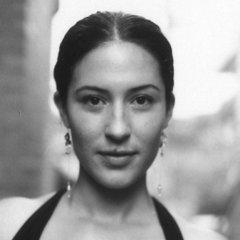
Ada Limon
Ada Limon

Ada Limón is an American poet known for her profound emotions and rich language style. Her work often explores themes of personal experience, nature, and the human condition. Born on March 28, 1976, Limón's poetry has won numerous awards, including the National Book Award. more

You May Also Like

“Margo tilted her head toward her husband asking, “What is it about beach volleyball that captures your attention?” More than anything I’m amazed how they’re able to keep everything in the proper place when spiking the ball. Makes me want to invest in spandex . . . and of course, their fitness is enviable,” he said, his face broadening into a playful smile.”

“Once, an elderly general practitioner consulted me because of his severe depression. He could not overcome the loss of his wife who had died two years before and whom he had loved above all else. Now, how could I help him? What should I tell him? Well, I refrained from telling him anything but instead confronted him with the question, 'What would have happened, Doctor, if you had died first, and your wife would have had to survive you?' 'Oh,' he said, 'for her this would have been terrible; how she would have suffered!' Whereupon I replied, 'You see, Doctor, such a suffering has been spared her, and it was you who have spared her this suffering—to be sure, at the price that now you have to survive and mourn her.' He said no word but shook my hand and calmly left my office. In some way, suffering ceases to be suffering at the moment it finds a meaning, such as the meaning of a sacrifice.”

“And yet. (“and yet” opening like a door.) How easily a life can become a litany of guilt and regret, a song that keeps echoing with the same chorus, with the inability to forgive ourselves. How easily the life we didn't live becomes the only life we prize. How easily we are seduced by the fantasy that we are in control, that we were ever in control, that the things we could or should have done or said have the power, if only we had done or said them, to cure pain, to erase suffering, to vanish loss. How easily we can cling to—worship—the choices we think we could or should have made. Could I have saved my mother? Maybe. And I will live for all of the rest of my life with that possibility. And I can castigate myself for having made the wrong choice. It is my prerogative. Or I can accept that the more important choice is not the one I made when I was hungry and terrified, when we were surrounded by dogs and guns and uncertainty, when I was sixteen; it’s the one I make now. The choice to accept myself as I am: human, imperfect. And the choice to be responsible for my own happiness. To forgive my flaws and reclaim my innocence. To stop asking why I deserved to survive. To function as well as I can, to commit myself to serve others, to do everything in my power to honor my parents, to see to it that they did not die in vain. To do my best, in my limited capacity, so future generations don’t experience what I did. To be useful, to be used up, to survive and to thrive so I can use every moment to make the world a better place. And to finally,finally, stop running from the past. To do everything possible to redeem it, and then let it go. I can make the choice that all of us can make. I can't ever change the past. But there is a life I can save: It is mine. The one I am living right now, this precious moment.”