Quotessence
Home / Quotes / Quote by Bill McKibben

Quote by Bill McKibben

Work

Oil and Honey: The Education of an Unlikely Activist

This book delves into the personal journey of the author, detailing their transition from a career in finance to a life dedicated to environmental advocacy and social change. more

Author
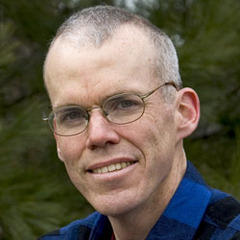
Bill McKibben
Bill McKibben

Bill McKibben, born on December 8, 1960, is an American environmentalist renowned for his deep research and advocacy on climate change issues. His work highlights the impact of human activities on the Earth, particularly the destruction caused by industrialization and consumerism. more

You May Also Like

“The linear order of time then is only true during wakeful states, only during the OUT cycle of consciousness. But again, wakefulness is not a constant linear thing, it is constantly fluctuating even when most of us think that we are quite awake and alert. The only way for humanity to maintain any linear order within physical time at all, is to use external physical devices (like clocks) or to focus the attention and record changes (like in calendars) in the First World. In this way, we may keep track of the physical cycles like the shift of the sun, the moon, the stars, and the seasons. Indeed, the written word, and the keeping of historical records, are ways for the outer self, the conscious ego, to maintain a semblance of linear and stable order within time.”

“The American West serves as a prototype for examining urban/hinterland relations under capitalism in still another way. Because the most powerful elements in capitalist social relations derive their authority from the ability to control allocative resources, it follows that the most significant places of capital accumulation would be the locus for decisions affecting the tiniest of hinterland outposts. In Appalachia, John Gaventa found that the forces "which propelled the development of a capital-intensive, resource extractive" economy "lay not in Appalachia but in the economic and energy demands of the British and American metropolis." ... Urban areas thus grew in accord with the degree and volume of capital invested in the adjacent countryside.”

“There had been an attempt over the summer to mix that Camden Lock lot with this Caldwell lot, but Keisha Blake did not especially care for Baudelaire or Bukowski or Nick Drake or Sonic Youth or Joy Division or boys who looked like girls or vice versa or Anne Rice or William Burroughs of Kafka's Metamorphosis or CND or Glastonbury or the Situationists or Breathless or Samuel Beckett or Andy Warhol or a million other Camden things, and when Keisha brought a wondrous Monie Love 7-inch to play on Leah's hi-fi there was something awful in the way Leah blushed and conceded it was probably OK to dance to. They had only Prince left, and he was wearing thin.”

“Rowena Clark and I had met on the first day of our mixed media class. I’d sat down at her table and said, “Mind if I join you? Figure the best way to learn about art is to sit with a masterpiece.” Maybe I was in love, but I was still Adrian Ivashkov. Rowena had fixed me with a flat look. “Let’s get one thing straight. I can see through crap a mile away, and I like girls, not guys, so if you can’t handle me telling you what’s what, then you’d better take your one-liners and hair gel somewhere else. I don’t go to this school to put up with pretty boys like you. I’m here to face dubious employment options with a painting degree and then go get a Guinness after class.” I’d scooted my chair closer to the table. “You and I are going to get along just fine.”