Quotessence
Home / Quotes / Quote by John Updike

Quote by John Updike

“When he was about twelve or thirteen he walked into his parents' bedroom in the half-house on Jackson Road not expecting his father to be there, and the old man was standing in front of his bureau in just socks and an undershirt, innocently fishing in a drawer for his undershorts, that boxer style that always looked sad and dreary to Harry anyway, and here was his father's bare behind, such white buttocks, limp and hairless, mute and helpless flesh that squeezed out shit once a day and otherwise hung there in the world like linen that hadn't been ironed....”

Quote by John Updike

Work

Rabbit is Rich

This book delves into the lives of the wealthy and the poor in a society recovering from war, examining the impact of wealth on individuals and society at large. more

Author

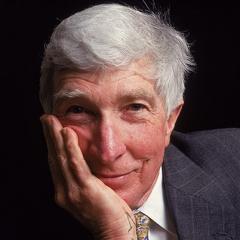
John Updike
John Updike

John Updike was an American novelist known for his profound insights into middle-class life and his delicate narrative skills. His works spanned a wide range of genres from short stories to novels, including the classic 'Rabbit, Run' series and 'The Centaur'. more

You May Also Like

“Though they love people, the Christians are enemies of our life, our gods and our crimes; hence she fled from me, as from a man who belongs to our [Roman] society, and with whom she would have to share a life counted criminal by Christians...I should not have stopped her from believing in her Christ, and would myself have reared an altar to Him in the atrium. What harm could one more god do me? Why might I not believe in Him, - I who do not believe over much in the old gods? ...It would not be difficult for me even to renounce other gods, for no reasoning mind believes in them at present. But it seems that all this is not enough yet for the Christians. It is not enough to honor Christ, one must also live according to His teachings; and here thou art on the shore of a sea which they command thee to wade through. Quo Vadis”

“...гореше миналото и душата на Рим, а той, цезарят, стоеше с лютня в ръката, с изражение на трагически актьор и с мисъл не за загиващия роден град, а за позата и за патетичните думи, чрез които би могъл най-добре да предаде огромността на бедствието, да предизвика колкото може по-голямо възхищение и да спечели горещи аплодисменти.”