Quotessence
Home / Quotes / Quote by George Eliot

Quote by George Eliot

“This is what you must be; this is what you are wanted for, a woman’s heart must be of such a size and no larger, else it must be pressed small, like Chinese feet; her happiness is to be made as cakes are, by a fixed receipt.”

Quote by George Eliot

Work

Daniel Deronda

Daniel Deronda is a complex narrative that intertwines the lives of its characters with the broader social and political context of the time. The story follows Daniel, a young man raised by a Jewish family, as he navigates his identity and relationships amidst the backdrop of the British Empire's expansion and the rise of Zionism. more
Author

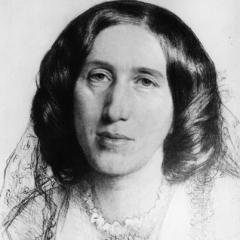
George Eliot
George Eliot

George Eliot, born Mary Ann Evans, was a renowned 19th-century British novelist. Her works are known for their profound psychological insights and critical exploration of social issues. With her unique narrative techniques and rich emotional expression, she has had a profound impact on literature. more

You May Also Like

“Religion, as it is known in the western world in the 19th century, was male religion. Judaism, Christianity and Islam, though they may differed about what sacrament to take when or which day was actually the Sabbath, were in completed agreement on one subject - the status of women. Females were to be regarded as inferior creatures who were divinely intended to be obedient and silent vessels for the production of children and the pleasure and convenience of men. These attitudes not only thrived in the Church but found their way past those great arched doorways to install themselves in a more personal way into the thoughts, feelings and values of every Jewish, Christian or Mohammedan family.”

“Considering the hatred the Hebrews felt towards the asherim, a major symbol of the female religion, it would not be too surprising if the symbolism of the tree of forbidden fruit, said to offer the knowledge of good and evil, yet clearly represented in the myth as the provider of sexual consciousness, was included in the creation story to warn that eating the fruit of this tree has caused the downfall of all humanity. Eating of the tree of the Goddess, which stood by each alter, was as dangerously "pagan" as were Her sexual customs and Her oracular serpents. So into the myth of how the world began, the story that the Levites oferred as the explanation of the creation of all existence, they place the advisory serpent and the woman who accepted its counsel, eating of the tree that gave her the understanding of what "only the gods knew" - the secret of sex - how to create life.”

“According to Egyptian texts, to eat of this fruit was to eat of the flesh and the fluid of the Goddess, the patroness of sexual pleasure and reproduction. According to the Bible story, the forbidden fruit caused the couple's conscious comprehension of sexuality. Upon eating the fruit, Adam and Eve became aware of the sexual nature of their own bodies, "And they knew that they were naked." So it was that when the male deity found them, they had modestly covered their genitals with aprons of fig leaves. But it was vitally important to the construction of the Levite myth that they did not both decide to eat the forbidden fruit together, which would have been a more logical turn for the tale to take since the fruit symbolised sexual consciousness. No, the priestly scribes make it exceedingly clear that the woman Eve ate of the fruit first - upon the advice and counsel of the serpent. It can hardly have been chance or coincidence that it was a serpent who offerred Eve the advice. For people at that time knew that the serpent was the symbol, perhaps even the instrument, of divine counsel in the religion of the Goddess. It was surely intended in the Paradise myth, as in the Indo-European serpent and dragon myths, that the serpent, as the familiar counsellor of women, be seen as a source of evil and be placed in such a menacing and villainous role that to listen to the prophetesses of the female deity would be to violate the religion of the male deity in the most dangerous manner. {...} We are told that, by eating the fruit first, women possessed sexual consciousness before man and in turn tempted man to partake the forbidden fruit, that is, to join her sinfully in sexual pleasures. This image of Eve as a sexually tempting but god-defying seductress was surely intended as a warning to all Hebrew men to stay away from the sacred women of the temples, for if they succumb to the temptations of these women, they simultaneously accepted the female deity - Her fruit - Her sexuality and, perhaps most important, the resulting matrilineal identity for any children who might be conceived in this manner. It must also, perhaps even more pointedly, have been directed at Hebrew women, cautioning them not to take part in the ancient religion and its sexual customs, as they appear to have continued to do so, despite the warnings and punishments meted out by the Levite priests.”

“As a result of "love," man is able to hide his cowardly self-deception behind a smoke screen of sentiment. He is able to make himself believe that his senseless enslavement to woman and her hostages is more than an act of honor, it has a higher purpose. He is entirely happy in his role as a slave and has arrived at the goal he has so long desired. Since woman gains nothing but one advantage after another from the situation as it stands today, things will never change. The system forces her to be corrupt, but no one is going to worry about that. Since one can expect nothing from a woman but love, it will remain the currency for any need she might have. Man, her slave, will continue to use his energies only according to his conditioning and never to his own advantage. He will achieve greater goals, and the more he achieves, the farther women will become alienated from him. The more he tries to ingratiate himself with her, the more demanding she will become; the more he desires her, the less she will find him desirable; the more comforts he provides for her, the more indolent, stupid, and inhuman she will become — and man will grow lonelier as a result.”

“The first laws we know about that make females inferior Uruk (Sumer). These laws list a new crime - adultery - that only women could commit. And in Sumer, a knew occupation - prostitution - is devised by the temple priests. The coincidence (in the same culture if not at the same moment) of an assertion of female inferiority, the criminalisation of free sexuality in women, and the use of female sexuality in commercial transactions benefiting men demonstrates the new male vision of women: as sexual objects to be possessed and used by men.”

“Historians often debate whether women have more rights and capabilities in religious or secular, Catholic or Protestant, capitalist or communist, or militaristic or humanitarian states. Such debates assume that the oppression of women is incidental to another aspect of culture. All early states deprived women of their status as human beings and of the rights men possessed. Religious states like India used religion to justify this constriction; China's guiding secular philosophy, Confucianism, constricted women as much as India's religious laws.”

“Both men and women collude in their oppression when they accept their societies myths, but many believe the myths and propaganda teaching male superiority. Laws forcing women into marriage by denying them any other avenue of support, or allowing them access to power only through sons, co-opt their loyalty. Women may even accept constrictions if it puts them in the superior group, makes them "ladies" in worlds that despise women.”