“One of my father’s purposes in going to Vienna was to see a journalist by the name of Karl Kraus. I do not know what they discussed, though they probably concerned themselves with Jewish matters and quite possibly with the problem of the translation into literary German of the Yiddish poems of Moritz Rosenfeld, the New York garment worker-poet, whom father had ‘‘discovered.’’ I remember being taken into Kraus’s apartment in an old-fashioned Vienna apartment house, and there I remember what seemed to me a confusion and disorder which I have never seen equaled elsewhere.”
Quote by Norbert Wiener
Work
Ex-prodigy: My Childhood and Youth
This book offers an intimate look into the personal experiences and challenges faced by an individual who achieved remarkable accomplishments at a young age. It explores the complexities of growing up as a prodigy, the impact of early recognition, and the journey towards self-discovery. more
Author
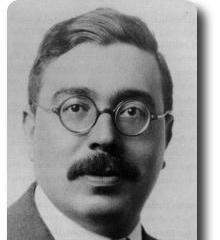
Norbert Wiener
Norbert Wiener, born on November 26, 1894, and died on March 18, 1964, was an American mathematician and a founding figure in the field of cybernetics. Known as the 'father of the information age,' Wiener made significant contributions to mathematics, physics, and engineering, particularly in the areas of stochastic processes, Fourier analysis, and control theory. more
You May Also Like
Source: Badlands
Source: Meditations on Christ: A 5-Minute Guided Journal for Christians
Source: The Vanishing Girl
Source: Autobiography of a Yogi
Source: 2666
“Once you start peeling back the layers of your well-being, you realize just how deep you can go.”
Source: The Energy Formula: Six life changing ingredients to unleash your limitless potential
“I know they were mean to me and to you, but helping them now is the right thing to do.”
Source: Tip & Lulu: A tale of two friends