Quotessence
Home / Quotes / Quote by Thomas Bernhard

Quote by Thomas Bernhard

“We had taken him for a Norwegian ship's captain and had come to his table to hear some more about seafaring, not about philosophy, from which, indeed, we had fled north from Central Europe.”

Quote by Thomas Bernhard

Work

The Voice Imitator

Browse quotes and source details for this work. more
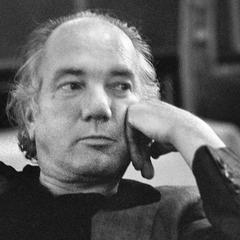
Author

Thomas Bernhard
Thomas Bernhard

Thomas Bernhard, born on February 9, 1931 and died on February 12, 1989, was an influential Austrian novelist. His works are renowned for their unique style and profound criticism of social reality. more

You May Also Like

“My broad conclusion is that an advanced global seafaring civilization existed during the Ice Age, that it mapped the earth as it looked then with stunning accuracy, and that it had solved the problem of longitude, which our own civilization failed to do until the invention of Harrison's marine chronometer in the late eighteenth century. As masters of celestial navigation, as explorers, as geographers, and as cartographers, therefore, this lost civilization of 12,800 years ago was not outstripped by Western science until less than 300 years ago at the peak of the Age of Discovery.”

“With my beloved sword I ministered to them, as it was meet. In no wise had they joy in that banqueting, foul doers of ill deeds, that they should devour me sitting round in feast nigh to the bottoms of the sea; nay, upon the morrow they lay upon the shore in the flotsam of the waves, wounded with sword-thrusts, blades done to death, so that never there-after might they about the steep straights molest the passage of seafaring men.”

“Here's what hurst the most," Kafuku said. "I didn't truly understand her--or at least some crucial part of her. And it may well end that way now that she's dead and gone. Like a small, locked safe lying at the bottom of the ocean. It hurts a lot." Tatsuki thought for a moment before speaking. "But Mr. Kafuku, can any of us ever perfectly understand another person? However much we may love them?”

“In his life, after all, he had achieved nothing, had been totally unproductive. He couldn’t make anyone else happy, and, of course, couldn’t make himself happy. Happiness? He wasn’t even sure what that meant. He didn’t have a clear sense, either, of emotions like pain or anger, disappointment or resignation, and how they were supposed to feel. The most he could do was create a place where his heart - devoid now of any depth or weight - could be tethered, to keep it from wandering aimlessly”

“Have you ever tried really hard not to love somebody too much?” “Why?” “It’s simple, really. If I love her too much, it’s painful. I can’t take it. I don’t think my heart can stand it, which is why I’m trying not to fall in love with her.” “What are you doing, exactly, so that you don’t love her too much?” “I’ve tried all kinds of things,” he said. “But it all boils down to intentionally thinking negative thoughts about her as much as I can. I mentally list as many of her defects as I can come up with—her imperfections, I should say. And I repeat these over and over in my head like a mantra, convincing myself not to love this woman more than I should.” “Has it worked?” “No, not so well.”