Quotessence
Home / Quotes / Quote by Romain Rolland

Quote by Romain Rolland

“[Jean-Christophe’s father] was not a bad man, but a half-good man, which is perhaps worse—weak, without spring, without moral strength, but for the rest, in his own opinion, a good father, a good son, a good husband, a good man—and perhaps he was good, if to be so it is enough to possess an easy kindness, which is quickly touched, and that animal affection by which a man loves his kin as a part of himself. It cannot even be said that he was very egoistic; he had not personality enough for that. He was nothing. They are a terrible thing in life, these people who are nothing. Like a dead weight thrown into the air, they fall, and must fall; and in their fall they drag with them everything that they have.”

Quote by Romain Rolland

Work

Jean Christophe

Jean Christophe is a comprehensive work that delves into the personal and professional development of its protagonist, Jean Christophe Mauduit, a young man with a passion for music. The narrative spans several decades, chronicling his journey from a provincial youth to a renowned composer. The novel is known for its rich character development and its exploration of themes such as artistic creation, love, and the complexities of human relationships. more

Author

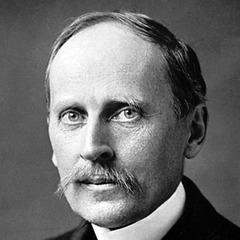
Romain Rolland
Romain Rolland

Romain Rolland, a French dramatist, novelist, essayist, and music critic, was born on January 29, 1866, and died on December 30, 1944. Known for his profound insights into human nature and rich emotional expression, his works include 'Jean-Christophe'. more

You May Also Like

“...[A]ll the elements which belong to the notion of happiness are altogether empirical, that is, they must be borrowed from experience, and nevertheless the idea of happiness requires an absolute whole, a maximum of welfare in my present and all future circumstances. Now it is impossible that the most clear-sighted and at the same time most powerful being (supposed finite) should frame to himself a definite conception of what he really wills in this. Does he will riches, how much anxiety, envy, and snares might he not thereby draw upon his shoulders? Does he will knowledge and discernment, perhaps it might prove to be only an eye so much the sharper to show him so much the more fearfully the evils that are now concealed from him and that cannot be avoided, or to impose more wants on his desires, which already give him concern enough. Would he have long life? Who guarantees to him that it would not be a long misery? Would he at least have health? How often has uneasiness of the body restrained from excesses into which perfect health would have allowed one to fall, and so on? In short, he is unable, on any principle, to determine with certainty what would make him truly happy; because to do so he would need to be omniscient.”