“It is a strange notion that the acknowledgment of a first principle is inconsistent with the admission of secondary ones. To inform a traveler respecting the place of his ultimate destination, is not to forbid the use of land-marks and direction-posts on the way. The proposition that happiness is the end and aim of morality, does not mean that no road ought to be laid down to that goal, or that persons going thither should not be advised to take one direction rather than another. Men really ought to leave off talking a kind of nonsense on this subject, which they would neither talk nor listen to on other matters of practical concernment. Nobody argues that the art of navigation is not founded on astronomy, because sailors cannot wait to calculate the Nautical Almanack. Being rational creatures, they go to sea with it ready calculated; and all rational creatures go out upon the sea of life with their minds made up on the common questions of right and wrong, as well as on many of the far more difficult questions of wise and foolish. And this, as long as foresight is a human quality, it is to be presumed they will continue to do. Whatever we adopt as the fundamental principle of morality, we require subordinate principles to apply it by: the impossibility of doing without them, being common to all systems, can afford no argument against any one in particular: but gravely to argue as if no such secondary principles could be had, and as if mankind had remained till now, and always must remain, without drawing any general conclusions from the experience of human life, is as high a pitch, I think, as absurdity has ever reached in philosophical controversy.”
Quote by John Stuart Mill
Book:Utilitarianism
Work
Utilitarianism
Utilitarianism is a foundational work in moral philosophy, offering a comprehensive examination of the principles of utilitarianism. The book delves into the concept of actions being inherently right or wrong based on their outcomes, specifically the promotion of happiness and the prevention of suffering. It is a seminal text that has influenced ethical thought and has been a cornerstone in discussions of moral responsibility and societal welfare. more
Author
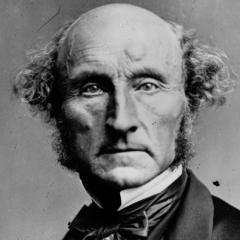
John Stuart Mill
John Stuart Mill was an influential British philosopher, economist, and logician. He is one of the most important figures in 19th-century philosophy and his ideas had a profound impact on political, social, and philosophical thought of the time. more
You May Also Like
Source: Practical Ethics
Source: The Four Thousand, the Eight Hundred
Source: Nihilism: A Philosophy Based In Nothingness And Eternity
Source: Autobiography
Source: Cupcakes and Kisses
Source: Cupcakes and Kisses
Source: A Kingdom of Flesh and Fire