Quotessence
Home / Quotes / Quote by Neel Burton

Quote by Neel Burton

Work

The Art of Failure: The Anti Self-Help Guide

Browse quotes and source details for this work. more

Author
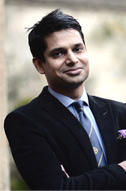
Neel Burton
Neel Burton

Neel Burton is an expert in an unknown field, born on June 3, 1978. His biography and contributions are not yet clear, and more information is needed. more

You May Also Like

“. . . at this season, the blossom is out in full now, there in the west early. It's a plum tree, it looks like apple blossom but it's white, and looking at it, instead of saying "Oh that's nice blossom" ... last week looking at it through the window when I'm writing, I see it is the whitest, frothiest, blossomest blossom that there ever could be, and I can see it. Things are both more trivial than they ever were, and more important than they ever were, and the difference between the trivial and the important doesn't seem to matter. But the nowness of everything is absolutely wondrous, and if people could see that, you know. There's no way of telling you; you have to experience it, but the glory of it, if you like, the comfort of it, the reassurance ... not that I'm interested in reassuring people - bugger that. The fact is, if you see the present tense, boy do you see it! And boy can you celebrate it.”

“From cave paintings depicting hunting grounds to the Babylonian tablets capturing the "whole world" (as they experienced it). Through the advancements of the Middle Ages, especially from Islamic scholars and Chinese cartographers. Massive strides came about with the Renaissance, as exploration and expansion abounded. Then on to the massive leaps to modern surveying and satellite imagery. The journey has been astonishing! I cannot help but think that this mirrors the path of our understanding of God and the world They created. Our sincere, yet limited perspectives began to expand as our experience and understanding grew. The reality of that which we sought to "map out" was (and is) often our best efforts, complicated by ignorance, limitations, bias, and more. We imperfectly stumble towards better, more honest representations. Even then, our growing understanding helps us see the limitations of our own attempts to bring meaning to that which is so much bigger than our capacity to fully understand. Just as we know that the Mercator projection map is deeply problematic and, in many ways, wildly incorrect, so too do so many of our understandings of the Divine often fail to meet our own standards. And in the same way, we also hold on to them because they are familiar and we are so deeply invested in them. And in the end, no matter how good and accurate and true our "maps" are, they will always and only ever be mere representations- pale reflections of a much grander, complex, and ever-changing reality.”