Quotessence
Home / Quotes / Quote by Rudolf Otto

Quote by Rudolf Otto

“Both imaginative Myth, when developed into a system, and intellectualist Scholasticism, when worked out to its completion, are methods by which the fundamental fact of religious experience is, as it were, simply rolled out so thin and flat as to be finally eliminated altogether.”

Quote by Rudolf Otto

Work

The Idea of the Holy

This book delves into the profound and complex nature of the sacred, examining its role and significance across different belief systems and intellectual traditions. more

Author

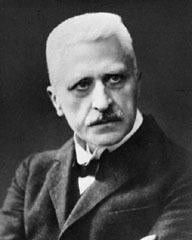
Rudolf Otto
Rudolf Otto

Rudolf Otto, a German philosopher born on September 25, 1869, and died on March 6, 1937. He is known for his work in the field of religious philosophy, particularly for his profound analysis of the nature of religious experience. more

You May Also Like

“Are you tired? Are you feeling that you will not be able to reach your destination? Then all you have to remember is that those who reached their far and hard destinations also felt the same way on their way! Knowing what others felt will give you a great power to complete your journey!”

“Tissa reflected that religion is divine poetry whilst morality is made up of customs and traditions that change with the place and the times. How do men who read the same books he reads, live on the same kind of food in the same world and social class, differ so much from him and from each other in mind and body? He concluded that his present state of body and mind that gives rise to his reflections cannot be just the outcome of books he read and the food he ate, nor his own efforts to adapt to his world and his social class. Human beings are born with an individuality that is unique to each, but this cannot be attributed to the presence or absence of a soul. The same individuality is there in each leaf, and one leaf differs from another. Yet all the leaves get the same nourishment from the roots of the tree, and the sun and the air.”

“An outsider's inquisitiveness to know another's private affairs is natural, but not so in children with respect to their parents. Children know the overt personal life of their parents. It is a crime for children to probe into mistakes made by their parents, like detectives looking for evidence of crimes. Any man can make mistakes, however good he may be. It is wrong for children to inquisitively probe into their parents' lives, and have fun or show anger over what they uncover. It is like digging into the heads of ancient statues in search of archaeological artefacts. Nanda spoke with anger.”