“I heard Mr. Ingersoll many years ago in Chicago. The hall seated 5,000 people; every inch of standing-room was also occupied; aisles and platform crowded to overflowing. He held that vast audience for three hours so completely entranced that when he left the platform no one moved, until suddenly, with loud cheers and applause, they recalled him. He returned smiling and said: 'I'm glad you called me back, as I have something more to say. Can you stand another half-hour?' 'Yes: an hour, two hours, all night,' was shouted from various parts of the house; and he talked on until midnight, with unabated vigor, to the delight of his audience. This was the greatest triumph of oratory I had ever witnessed. It was the first time he delivered his matchless speech, 'The Liberty of Man, Woman, and Child'. I have heard the greatest orators of this century in England and America; O'Connell in his palmiest days, on the Home Rule question; Gladstone and John Bright in the House of Commons; Spurgeon, James and Stopford Brooke, in their respective pulpits; our own Wendell Phillips, Henry Ward Beecher, and Webster and Clay, on great occasions; the stirring eloquence of our anti-slavery orators, both in Congress and on the platform, but none of them ever equalled Robert Ingersoll in his highest flights. {Stanton's comments at the great Robert Ingersoll's funeral}”
Quote by Elizabeth Cady Stanton
Author
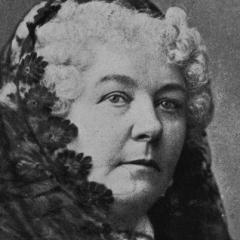
Elizabeth Cady Stanton
Elizabeth Cady Stanton, born on November 12, 1815, and died on October 26, 1902, was a pioneering American activist for women's rights. She was a key figure in the women's rights movement, known for her dedication to the fight for women's suffrage and gender equality. more
You May Also Like
“Love is not like Ice, that melts but the foundation of Respect, Love and Care”
Source: Şah. Mat. Aşk.: Bazen bir hamle, bir ömrü değiştirir
“We must protect and share the world.”
Source: Voice of Reason
“Sometimes those who are easiest to love are hardest to respect. - Ashley Wilkes”
Source: Rhett Butler's People
“We can give up belief in God while not losing touch with a treasured heritage.”
Source: The God Delusion
“The immoral can no more earn respect Than the envious be rich.”
Source: Kural