“John will never forsake the weak and the helpless, nor fail to bring hope to the hopeless. That is what they believe, and so they do not worry. They go on and laugh and sing. Things are bound to come out right tomorrow. That is the secret of Negro song and laughter.”
Quote by Zora Neale Hurston
Author
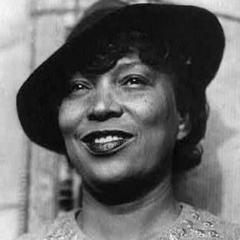
Zora Neale Hurston
Zora Neale Hurston (1891-1960) was an American anthropologist, folklorist, and novelist who played a pivotal role in the Harlem Renaissance. Born in Alabama and raised in Eatonville, Florida, she became the first African American student at Barnard College, Columbia University, studying under Franz Boas. Hurston is best known for her novel "Their Eyes Were Watching God," now considered a classic of American literature. She conducted extensive anthropological fieldwork in the American South and Caribbean, preserving African American folk traditions. Though largely forgotten after her death, her work was revived by Alice Walker in the 1970s, establishing her as a foundational figure in African American literature and anthropology. more
You May Also Like
“She was only half Bird now, and the other half song. She liked it that way.”
Source: Summer and Bird
Source: Burning Bridges
“Instead of worrying about what you cannot control, shift your energy to what you can create.”
Source: The Light in the Heart
“Keep an open mind. Do not worry about a closed door in life. A better door will eventually come.”
Source: Beyond the Closed Door: Unique Keys to Unlock Destinies
Source: Five Types