Quotessence
Home / Quotes / Quote by Daniel Keyes

Quote by Daniel Keyes

Work

Flowers for Algeron

Browse quotes and source details for this work. more
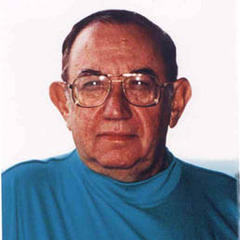
Author

Daniel Keyes
Daniel Keyes

Daniel Keyes, born on August 9, 1927, was a renowned American author known for his profound psychological insights and exploration of human nature. His most famous work, 'Flowers for Algernon,' tells the story of a man with intellectual disability who undergoes an operation to increase his intelligence, delving deeply into the complexities of human emotions and morality. Keyes' writing has had a significant impact on contemporary literature, offering both readers and the fields of psychology and sociology valuable insights. more

You May Also Like

“Every night I want to be Heathcliff with Cathy tapping at the window. I want to be Hamlet on the windy battlements. I want the Flying Dutchman to dock. I want what everyone who has lost someone wants: a visitation. Every second, someone dying is promising to come back from the dead. Every hour, waiting for it to happen, someone living notches up another hour lost. For the Dead, time stops. For the living, time slows. I am in slow-motion now. It takes me twice as long to clean my teeth, half the morning to make coffee and wash the cup. When I go shopping, I don't remember what I need. That's because it's you I need. I stare at the bag of potatoes, the packet of bacon. Absurd. Go home.”

“How could I not go on talking to you? How could I not expect to see you when it's the end of the day? Our life together was many things, concrete, tangible things, that included bacon, potatoes, coffee and toothpaste, but it was also a pattern. We had flow, colour, texture. We were the originators and makers of the shared life that we worked on every day. Now, I have to work on it alone. What I have are memories. The past. The present is no longer a work in progress.”

“It was easier to cry alone. No people or mirrors to bear witness. Ethan sobbed into his fist, the swell of pointlessness and frustration bursting a dam in his throat. The exhaust fan drowned out the sound. Ethan wanted to scream, to manifest some tangible evidence of the shredding hurt. He managed a few croaky gasps, the sound withering like rot. Even encased in solitude and steam, it felt performative.”

“I am sometimes tempted to feel like God has become distant from me or turned his face away. I sometimes feel as if God's love for me has grown cool. Perhaps he has turned his attention elsewhere or turned down his affections. But then I think of our planet, I think of our sun, and I think of our God. Surely he is not a God who forsakes his people when they need him, his children when they cry out for him. Surely he is not a God who is least present when most needed. He promises that his eye is upon us and his ear is toward us, so when we cry out, he hears and delivers. He promises he is near to the brokenhearted and saves those who are crushed in spirit. Is my spirit not crushed? is my heart not broken? Am I not crying out? Then surely God is near. Surely God has not turned away. Surely he is not ignoring my cries.”

“I think you’re confusing the opposite of love with hurt.” “No,” I disagreed. “I know the opposite of love is hate.” “No,” he replied with a headshake. “The opposite of love is indifference. The feeling of emptiness. That’s what the opposite of love is. Love allows you space to feel everything—joy, bliss, sorrow, and pain. Grief is love, Avery. Love and grief go hand in hand.” “Why is that?” “Because grief is the realization that you could care for another so deeply. That your heart could shatter a million ways, all due to how much you adored another. Being able to feel so deeply is a gift, baby girl. It’s the indifference, the inability to feel, that is the curse.” “It’s scary to feel grief…” “It’s even scarier to feel nothing.”