Quotessence
Home / Quotes / Quote by Anthony Burgess

Quote by Anthony Burgess

“What's all this about sin, eh?' 'That,' I said, very sick. 'Using Ludwig van like that. He did no harm to anyone. Beethoven just wrote music.' And then I was really sick and they had to bring a bowl that was in the shape of like a kidney. 'Music,' said Dr. Brodsky, like musing. 'So you're keen on music. I know nothing about it myself. It's a useful emotional heightener, that's all I know. Well, well. What do you think about that, eh, Branom?' 'It can't be helped,' said Dr. Branom. 'Each man kills the thing he loves...”

Quote by Anthony Burgess

Work

A Clockwork Orange

A novel set in a dystopian future where the protagonist, Alex, is a violent teenager. The story delves into the consequences of his actions and the societal implications of his transformation through an experimental conditioning procedure. more

Author

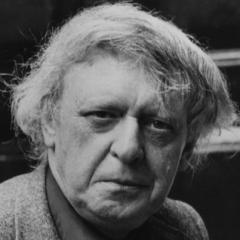
Anthony Burgess
Anthony Burgess

Anthony Burgess, born on February 25, 1917, in Manchester, England, was an accomplished British writer known for his distinctive literary style and profound insights into human psychology. His works spanned various literary genres, including novels, plays, and poetry. Burgess' most famous novel, A Clockwork Orange, is one of the most celebrated works of the 20th century, exploring themes such as free will, morality, and social control. more

You May Also Like

“When man subverted order he did a great deal more than merely fall away from the rationality of his nature, diminish his own humanity, which is all that he does in Aristostle's ethics, nor he did merely compromise his destiny by an error, as it happens in the Plathonic myths; he brought disorder into the divine order, and presents the unhappy spectacle of a being in revolt against Being. [...] Every time a man sins he renews this act of revolt and prefers himself to God; in thus preferring himself, he separates himself from God; and in separating himself, he deprives himself of the sole end in which he can find beatitude and by that very fact condemns himself to misery.”

“Then round about the age of twenty-five, I was tired of being tired of being scared about doing something that, if I deconstruct it honestly, might somehow cost me my salvation and make God love me less. When I understood, in God's grace, that there was nothing—not a thing—I could do to make God love me any less or any more, when I understood that there was nothing wrong or right about who I am in God's eyes, that I'm just loved, I started to live. Boldly. Or at least as boldly as I can muster much of the time.”