Quotessence
Home / Quotes / Quote by Robert Fisk

Quote by Robert Fisk

“Our wars in Iraq, in Bosnia and in Kosovo contained a sinister pattern, a ‘normalisation’ of war. If our outrageous assaults on our enemies were too much for the audience, we either apologised – accidents happen in war, do they not? – or we blamed the victims. If we bombed a bunker packed with civilians in Baghdad, it was only because Saddam had used identical bunkers for command and control operations. So when we bombed Afghanistan in 2001 and destroyed entire villages, it was because al-Qaeda or the Taliban had been hiding there or – if they hadn’t – their tactic of hiding in other villages was to blame. And in 2003, we created a pageant of identical ruthlessness against the Iraqis.”

Quote by Robert Fisk

Work

Night of Power: The Betrayal of the Middle East

Browse quotes and source details for this work. more

Author
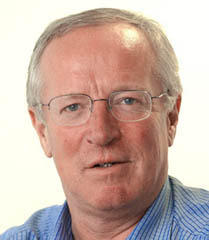
Robert Fisk
Robert Fisk

Robert Fisk, born on July 12, 1946, is a British writer renowned for his coverage of the Middle East. His work spans politics, history, and society, offering profound insights into the conflicts and transformations in the region. more

You May Also Like

“The male’s chief delight in life—insofar as the tense, grim male can ever be said to delight in anything—is in exposing others. It doesn’t much matter what they’re exposed as, so long as they’re exposed; it distracts attention from himself. Exposing others as enemy agents (Communists and Socialists) is one of his favorite pastimes, as it removes the source of the threat to him not only from himself, but from the country and the Western world. The bugs up his ass aren’t in him; they’re in Russia.”

“This is my home, however unsettled it has always been on the inside. I've never thought of it as the place I might die in before I've had a chance to live. There must be a life beyond this fort that I feel so trapped inside. It can't end this way before it's even begun. A meaningless life ended by meaningless death. The silence around me is of a city that has warred with itself all day and is now pretending to sleep. I am sick of pretending. I want to stay up, keep watch, turn on every light in every home so no one can sneak up on us in the dark.”

“Fugitive Peace (Sonnet 2219) In the opera of war, peace is fugitive - thinking soldiers are no good to state, either you kill without question, and grab your medal, or get discharged dishonorably. Thinking citizens are no good to democracy, either you obey blind or be branded a terrorist. Either you hold your mouth, mind and backbone, or be jailed as an anarchist. If you want to be an actor, don't go to film school, become an intern to some politician. Some say secularism is in their blood, some say liberty, all the while being the posterboys of persecution. No politician will prioritize peace, if they did, they would be out of business. War is the currency of political power - abandon fanaticism, and politicians go extinct.”

“As I drank, I saw Srebrenica spread out before me from halfway up the hill, coated with a thick winter fog. Snow dusted the hills surrounding us, hugging the town in its icy embrace. Conifer trees dotted the hills, their branches looking muted from the snow covering them. Snow covered all the roofs in the valley, giving everything a white and still appearance. We felt frozen in time, abandoned and forsaken, which was a true reflection of our internal state. “The government should create a new tourism campaign. Srebrenica, the place where time kneels between mountains.” Ramo waved his hands out to the terrain before us. After we got our breath back from laughing, I passed the bottle to him. My cheeks flushed as he placed his lips over the spout where my lips had been. He finished drinking and handed me the bottle. Our fingers touched, sparks flying.”