Quotessence
Home / Quotes / Quote by Roland Barthes

Quote by Roland Barthes

“Truth to tell, what is invested in the concept is less reality than a certain knowledge of reality; in passing from the meaning to the form, the image loses some knowledge: the better to receive the knowledge in the concept. In actual fact, the knowledge contained in a mythical concept is confused, made of yielding, shapeless associations.”

Quote by Roland Barthes

Work

Mythologies

An in-depth exploration of how myths from various cultures have shaped contemporary society, literature, and the human psyche. more

Author

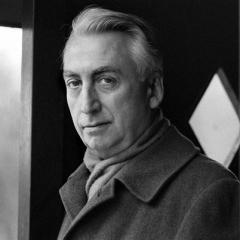
Roland Barthes
Roland Barthes

Roland Barthes (November 12, 1915 – March 25, 1980) was a French philosopher, literary critic, semiotician, and sociologist. He was a leading figure in structuralism and post-structuralism, known for his profound insights into semiotics, cultural criticism, and literary theory. His works, such as Mythologies, S/Z, and The Death of the Author, challenged traditional notions of authorship and meaning, emphasizing the multiplicity of texts and the active role of readers. Barthes' interdisciplinary approach influenced cultural studies, media analysis, and postmodern thought, making him one of the most influential intellectuals of the 20th century. more

You May Also Like

“Our mind needs a code to translate consensus images into thoughts and feelings… the translation code takes the form of a mental narrative we tell ourselves; a story that implies particular correspondences between outer images and inner feelings and ideas. The translation code is thus a myth… myth is a story that implies a certain way of interpreting consensus reality so to derive meaning and affective charge from its images and interactions.”

“The logical constraints of the human intellect are very useful but ultimately arbitrary. After all, one cannot logically argue for the absolute validity of logic without begging the question. The obfuscated mind, for not being restricted to such arbitrary constraints, can embody a much greater range of cognition than the intellect. Its symbolic character should be regarded, according to Carl Jung, as an ancient mode of thought that has been superseded - or rather, obfuscated - by the relatively recent acquisition of linguistic thinking.”

“Sorry,ʺ she said, her face shining with joy when she saw me. ʺShould have put a sock on the door. Didnʹt realize things were getting hot and heavy.ʺ ʺNo avoiding it,ʺ I said lightly, clasping Dimitriʹs hand. ʺThings are always hot with him around.ʺ Dimitri looked scandalized. Heʹd never held back when we were in bed together, but his private nature wouldnʹt let him even hint about such matters to others. It was mean, but I laughed and kissed his cheek. ʺOh, this is going to be fun,ʺ I said. ʺNow that everythingʹs out in the open.ʺ ʺYeah,ʺ he said. ʺI got a pretty ‘funʹ look from your father the other day.”