Quotessence
Home / Quotes / Quote by Seamus Heaney

Quote by Seamus Heaney

“It was like the misery felt by an old man who has lived to see his son's body swing on the gallows. He begins to keen and weep for his boy, watching the raven gloat where he hangs: he can be of no help. The wisdom of age is worthless to him. Morning after morning, he wakes to remember that his child is gone; he has no interest in living on until another heir is born in the hall, now that his first-born has entered death's dominion forever. He gazes sorrowfully at his son's dwelling, the banquet hall bereft of all delight, the windswept hearthstone; the horsemen are sleeping, the warriors under ground; what was is no more. No tunes from the harp, no cheer raised in the yard. Alone with his longing, he lies down on his bed and sings a lament; everything seems too large, the steadings and the fields.”

Quote by Seamus Heaney

Book:Beowulf

Work

Beowulf

Beowulf is an Old English epic tale of heroism and the struggle against monsters, set in the Anglo-Saxon period. more

Author

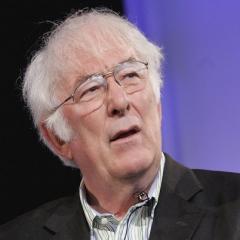
Seamus Heaney
Seamus Heaney

Seamus Heaney was an Irish poet born on April 13, 1939, and passed away on August 30, 2013. He is renowned for his profound humanistic concerns and exquisite poetic skills, being one of the most influential poets of the 20th century. more

You May Also Like

“PAIN. The pain doesn't elevate, it shrivels. Far from improving us, it weakens us. It does not lead to sublime thoughts, it condemns people to no longer think at all. Pain is not an ennobling privilege, quite a knocking down scourge. LA DOULEUR. " La douleur n’élève pas, elle ratatine. Loin de nous améliorer, elle nous amenuise. Elle ne conduit pas à des pensées sublimes, elle condamne à ne plus penser du tout. La douleur n’a rien d’un privilège qui ennoblit, tout d’un fléau qui fout à terre. " ( Journal d'un amour perdu - 2019 - Éric-Emmanuel Schmitt )”

“Here's the truth about grief: loss gets integrated, not overcome. However long it takes, your heart and your mind will carve out a new life amid this weirdly devastated landscape. Little by little, pain and love will find ways to coexist. It won't feel wrong or bad to have survived. It will be, simply, a life of your own making: the most beautiful life it can be, given what is yours to live.”

“Was it ghastly?" I remembered the sunlit summer of 1940, the crowds rushing from Paris, as from a fire, to join the snake-like lines of mattress-topped cars that drove slow, slower and slowest of all just before their closely packed passengers scattered into ditches where the dive bombers still found them. I remembered Nice with its sea and sky and palm trees still as bright as new travel posters and its sidewalks crowded with the most typical of twentieth-century tourists: displaced persons. I remembered the sensation of living in a dull fear-encircled vacuum and the incredulous joy with which I greeted my husband when he arrived hollow-eyed from his narrow escape and long hitch-hike across two countries. I remembered Lyons in the unheated winters, the wind scything between the cliff-like gray houses and inserting itself into the city's labyrinth of passageways. I remembered the turnip meals, the recurrent colds and chilblains, the disinclination to wash in icy water, the sordid temporary lodgings and false identity cards, the drearily uncomfortable atmosphere, and the exhilarating meetings with friends who had also escaped arrest. And then I remembered my husband's arrest and the nightmare that followed. "Yes," I said, repudiating stiff upper lips, "yes, it was ghastly.”