Quotessence
Home / Quotes / Quote by Kate Mosse

Quote by Kate Mosse

Work

Citadel

In this futuristic narrative, a corporation has taken over governance, shaping a world where citizens are monitored and controlled. The story follows the struggles of individuals fighting against the oppressive regime. more

Author

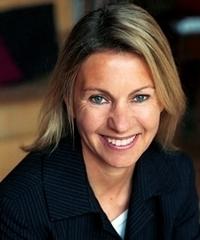
Kate Mosse
Kate Mosse

Kate Mosse is a British novelist known for her historical fantasy novels. Her works often blend historical and fictional elements, enjoying great popularity among readers. more

You May Also Like

“My career still strikes me as miraculous. That a boy raised on Marine bases in the South, taught by Roman Catholic nuns in backwater Southern towns that loathed Catholics, and completed his education with an immersion into The Citadel—the whole story sounds fabricated, impossible even to me. Maybe especially to me.”

“From the beginning, I’ve told journalists that I planned to write better than any writer of my era who graduated from an Ivy League college. It sounds boastful and it is. But The Citadel taught me that I was a man of courage when I survived that merciless crucible of a four-year test that is the measure of The Citadel experience. I’m the kind of writer I am because of The Citadel.”

“Because," explained Mary Rommely simply, "the child must have a valuable thing which is called imagination. The child must have a secret world in which live things that never were. It is necessary that she believe. She must start out by believing in things not of this world. Then when the world becomes too ugly for living in, the child can reach back and live in her imagination. I, myself, even in this day and at my age, have great need of recalling the miraculous lives of the Saints and the great miracles that have come to pass on earth. Only by having these things in my mind can I live beyond what I have to live for.”

“And I have begun thinking of that life as miraculous and lucky. How could a man I had dreaded as my commandant and who tried twice to get me kicked out of college become the subject of the first book I would write? [...] Who could have foreseen the day I would deliver his eulogy at the Summerall Chapel, or that I would give a speech on the night they named the dining room in the new Alumni Hall after him? Not me. Not once. Not ever.”

“Once The Boo roamed this campus fierce, alert, and lion-voiced, and his wrath was a terrible thing. He could scream and rant and call us “bums” a thousand times, but he could not hide his clear and overwhelming love of the Corps. The Corps received that love, took it in, felt it in the deepest places, and now, tonight, we give it back at the school where we started out and we give it to The Boo, as a gift, because once, many years ago, The Boo loved us first, when we were cadets of boys and when we needed it the most.”

“If Jim was back at the imaginary dinner party, trying to explain what he did for a living, he'd have tried to keep it simple: clearing involved everything that took place between the moment someone started at trade — buying or selling a stock, for instance — and the moment that trade was settled — meaning the stock had officially and legally changed hands. Most people who used online brokerages thought of that transaction as happening instantly; you wanted 10 shares of GME, you hit a button and bought 10 shares of GME, and suddenly 10 shares of GME were in your account. But that's not actually what happened. You hit the Buy button, and Robinhood might find you your shares immediately and put them into your account; but the actual trade took two days to complete, known, for that reason, in financial parlance as 'T+2 clearing.' By this point in the dinner conversation, Jim would have fully expected the other diners' eyes to glaze over; but he would only be just beginning. Once the trade was initiated — once you hit that Buy button on your phone — it was Jim's job to handle everything that happened in that in-between world. First, he had to facilitate finding the opposite partner for the trade — which was where payment for order flow came in, as Robinhood bundled its trades and 'sold' them to a market maker like Citadel. And next, it was the clearing brokerage's job to make sure that transaction was safe and secure. In practice, the way this worked was by 10:00 a.m. each market day, Robinhood had to insure its trade, by making a cash deposit to a federally regulated clearinghouse — something called the Depository Trust & Clearing Corporation, or DTCC. That deposit was based on the volume, type, risk profile, and value of the equities being traded. The riskier the equities — the more likely something might go wrong between the buy and the sell — the higher that deposit might be. Of course, most all of this took place via computers — in 2021, and especially at a place like Robinhood, it was an almost entirely automated system; when customers bought and sold stocks, Jim's computers gave him a recommendation of the sort of deposits he could expect to need to make based on the requirements set down by the SEC and the banking regulators — all simple and tidy, and at the push of a button.”