Quotessence
Home / Quotes / Quote by Neil Gaiman

Quote by Neil Gaiman

Work

The Ocean at the End of the Lane

This novel delves into the complex relationship between a young boy and the enigmatic woman who lives at the end of his lane. The story is interwoven with elements of fantasy and the supernatural, creating a chilling atmosphere that lingers long after the final page is turned. more

Author
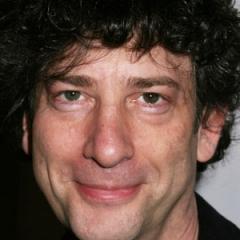
Neil Gaiman
Neil Gaiman

Neil Gaiman, born on November 10, 1960, is a renowned British author. His works span across various genres including fantasy, horror, and science fiction, with notable titles such as 'American Gods' and 'Good Omens'. Gaiman's writing style is distinctive and has won him a dedicated fan base. more

You May Also Like

“It was too quiet for hope, and then too loud for safety. She thought of the people she had lost, of the affection, the smiles, the belonging she could never again take for granted. It was the end of a life, and as she stood there, shivering in the brief night-time chill, it dawned on her that it was the end of her childhood.”

“I also think of those daily slaughters along the highways, of that death that is as horrible as it is banal and that bears no resemblance to cancer or AIDS because, as the work not of nature but of man, it is an almost voluntary death. How can it be that such a death fails to dumbfound us, to turn our lives upside down, to incite us to vast reforms? No, it does not dumbfound us, because like Pasenow, we have a poor sense of the real, and in the sur-real sphere of symbols, this death in the guise of a handsome car actually represents life; this smiling death is con-fused with modernity, freedom, adventure, just as Elisabeth was con-fused with the Virgin. This death of a man condemned to capital punishment, though infinitely rarer, much more readily draws our attention, rouses passions: confounded with the image of the executioner, it has a symbolic voltage that is far stronger, far darker and more repellent. Et cetera. Man is a child wandering lost—to cite Baudelaire`s poem again—in the "forests of symbols." (The criterion of maturity: the ability to resist symbols. But mankind grows younger all the time.)”