“I also think of those daily slaughters along the highways, of that death that is as horrible as it is banal and that bears no resemblance to cancer or AIDS because, as the work not of nature but of man, it is an almost voluntary death. How can it be that such a death fails to dumbfound us, to turn our lives upside down, to incite us to vast reforms? No, it does not dumbfound us, because like Pasenow, we have a poor sense of the real, and in the sur-real sphere of symbols, this death in the guise of a handsome car actually represents life; this smiling death is con-fused with modernity, freedom, adventure, just as Elisabeth was con-fused with the Virgin. This death of a man condemned to capital punishment, though infinitely rarer, much more readily draws our attention, rouses passions: confounded with the image of the executioner, it has a symbolic voltage that is far stronger, far darker and more repellent. Et cetera. Man is a child wandering lost—to cite Baudelaire`s poem again—in the "forests of symbols." (The criterion of maturity: the ability to resist symbols. But mankind grows younger all the time.)”
Quote by Milan Kundera
Book:The Art of the Novel
Work
The Art of the Novel
Browse quotes and source details for this work. more
Author
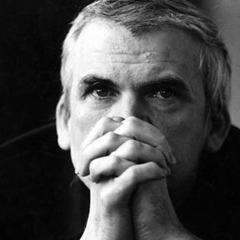
Milan Kundera
Milan Kundera is a renowned Czech-French writer known for his profound psychological insights and unique narrative techniques. His works often explore themes of personal freedom, love, morality, and existentialism, with notable titles including 'The Unbearable Lightness of Being' and 'The Joke'. more
You May Also Like
Source: Kafka on the Shore
Source: Spikeseed
Source: Navigating the Turbulent Middle School Years: Common-Sense Solutions for Problems and Behaviors
“Envy is a much natural byproduct when your childhood isn’t the way it is supposed to be”
Source: More Than Just Friends
Source: Absolute Friends
Source: Kulosaarentie 8/Majavatie 11/Mariankatu 26
Source: Lucrezia Borgia