Quotessence
Home / Quotes / Quote by Richard Rohr

Quote by Richard Rohr

“Setting out is always a leap of faith, a risk in the deepest sense of the term, and yet an adventure too. The familiar and the habitual are so falsely reassuring, and most of us make our homes there permanently. The new is always by definition unfamiliar and untested, so God, life, destiny, suffering have to give us a push--usually a big one--or we will not go.”

Quote by Richard Rohr

Work

Falling Upward: A Spirituality for the Two Halves of Life

This book delves into the spiritual journey of individuals as they navigate the complexities and transformations that occur during the latter part of life. more

Author
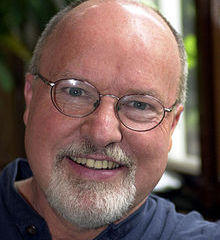
Richard Rohr
Richard Rohr

Richard Rohr is an American theologian, writer, and priest, born in 1943. He is known for his profound insights into Christian spirituality and his critical thinking about contemporary society. more

You May Also Like

“We couldn't trust them. They couldn't trust us. Mutual attempts at destruction are the only logical result. He thought of human dreams - both Old Empire and new - of contacting some extra-terrestrial intelligence such as nobody had ever truly encountered. Why? Why would we ever want to? We'd never be able to communicate, and even if we could, we'd still be those same two prisoners forced to trust - and risk - or to damn the other in trying to save slightly more of our own hides.”

“Trust of others is in short supply for many adult survivors, as complex trauma generally involves major relational betrayal. It is, therefore, expectable (although paradoxical) that clients with these histories are predisposed to be mistrustful at the outset of therapy, precisely because of (and in proportion to) the actual trustworthiness of the therapist. When past experiences have thought hard lessons, namely, that one can least afford to trust the people who should be most trustworthy, it stands to reason that confusion about trust results. The therapist must understand and not take offense either personally or professionally and not react judgmentally or defensively. Practically speaking, this involves the therapist being prepared to patiently and empathically respond to active or passive tests or challenges to trustworthiness as legitimate and meaningful communication that deserves a respectful reply in action as well as in words.”

“The overarching principle of a therapeutic relationship is that therapists should be ever mindful of a variant of the Hippocratic oath and, to the degree possible, strive to "do no more harm" (Courtois, 2010). Complex trauma clients have already experienced considerable harm, much of it at the hands of other human beings. As a result of the ubiquitous processes of transference, attachment styles, and IWM [Internal working models], these clients often view the therapist's behavior and their relationship through the lens of their trauma-related negative interpersonal expectancies and unhealed emotional wounds and injuries. Therapists should not be surprised to be "guilty until proven innocent", not because clients with complex trauma histories are "unfair" or "unreasonable" but precisely the opposite - because the most realistic self-protective stance for them (given the fact that betrayal and harm have been more the rule than the exception) is to "distrust first and verify" (or to be hypervigilant) rather than to start with an expectation of safety and trustworthiness.”

“It is often a puzzle for foreigners why the United States has such a dismal performance when it comes to murder, guns, and mental illness, all features of American life that, when compared to most of the other wealthy countries, are so awful they do not require further documentation. You might wonder how those bad results square with America’s relatively strong performances on most social capital indices, such as trust, cooperation, and charitable philanthropy; on philanthropy, we even rate as the global number one. The truth is that those positive and negative facets are two sides of the same coin: Cooperation is very often furthered by segregating those who do not fit in. That creates some superclusters of cooperation among the quality cooperators and a fair amount of chaos and dysfunctionality elsewhere.”