Quotessence
Home / Quotes / Quote by Herman Wouk

Quote by Herman Wouk

Work

Inside, Outside: A Novel

Browse quotes and source details for this work. more

Author
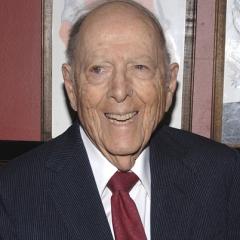
Herman Wouk
Herman Wouk

Herman Wouk, an American author born on May 27, 1915, is renowned for his historical novels and war-themed works. His notable works include 'The Caine Mutiny' and 'The Winds of War', among others. more

You May Also Like

“To-do list: 1. Science – stop people from getting sick and dying. 2. Keep people economically solvent – as you request their help in fighting the pandemic. Some states do better at one. Others, at the other. None strike the right balance. Everything collapses. Utter failure. One party is full of bad ideas that their rivals merely rubber-stamp. Like a reverse Robin Hood, they scapegoat the powerless, while simultaneously handing out checks to the richest stakeholders. The other party has few ideas, except for a few bad ones of their own that they throw into the mix. Businesses, flush with cash, appear almost embarrassed to take public money. But they soon get over their initial shame.”

“Wells supposed the United States had been lucky to have D.C. If the capital had stayed in the North, the South might have seceded a decade earlier, before the Union Army could bring it to heel. And if the South had broken away, at least three countries would have formed in the area now occupied by the United States - a North, a South, and a West. Then the United States wouldn't have been the dominant world power in the twentieth century. Perhaps World War I or even World War II would have ended differently. On and on the counterfactual history ran.”

“Like the mouse creeping out of the scarlet crack, the sunset gnaws hungrily the electric cheese of the outskirts, erected by those who clearly trust their knack for surviving everything: by termites. Warehouses, surgeries. Having measured there the proximity of the desert, the cinnamon-tinted earth waylays its horizontality in the fake pyramids, porticoes, rooftops' ripple, as the train creeps knowingly, like a snake, to the capital's only nipple.”

“Later, Tara and other leaders, roughly the same age, lead marches through the streets. Like lambs to the slaughter, we follow. We target the banks. They’re put on notice that their day is over. It’s street theater and people who work there watch the show from windows, high above. Next, the girls lead us to the Chamber of Commerce where plainclothes ex-military protect the movers and shakers from a scattering of college girls and a collection of workers who need better jobs. They watch us through mirrored sunglasses and communicate via hidden microphones and listening devices. It’s a routine that everyone, except us, knows.”

“I have never really liked this city. It was forced on me against my will by ambitious parents in search of greater opportunities and better lives. That’s why everyone comes here, to this seductive monument to self-advancement or at the very least, self-preservation. It’s a city that doesn’t take risks. Men wear boxy suit jackets over golf shirts tucked into khakis. Women wear sensible skirts, pantsuits and pumps. They all pull roller backpacks behind them because of subway ads enumerating the signs and evils of scoliosis as they walk to big-box buildings made of similarly colored sandstone. You can’t get lost here because there’s nothing to lose yourself in. These avenues, at least downtown, are not built for wanderers, and these monuments are constructed to inspire awe not contemplation. But things have changed if only to protect the desire to remain the same. The streets have more barricades because the streets have more impromptu protesters, a dismal lot with their posterboard signs and hoarse-voiced chants against the monster in power and his minions. There are more armored vehicles now and more police officers in tactical gear and body armor wielding large black guns. It’s a brave new world wrapped around the old one to make it great again.”