“With savages, the weak in body or mind are soon eliminated; and those that survive commonly exhibit a vigorous state of health. We civilised men, on the other hand, do our utmost to check the process of elimination; we build asylums for the imbecile, the maimed, and the sick; we institute poor-laws; and our medical men exert their utmost skill to save the life of every one to the last moment. There is reason to believe that vaccination has preserved thousands, who from a weak constitution would formerly have succumbed to small-pox. Thus the weak members of civilised societies propagate their kind. No one who has attended to the breeding of domestic animals will doubt that this must be highly injurious to the race of man. It is surprising how soon a want of care, or care wrongly directed, leads to the degeneration of a domestic race; but excepting in the case of man himself, hardly any one is so ignorant as to allow his worst animals to breed. The aid which we feel impelled to give to the helpless is mainly an incidental result of the instinct of sympathy, which was originally acquired as part of the social instincts, but subsequently rendered, in the manner previously indicated, more tender and more widely diffused. Nor could we check our sympathy, if so urged by hard reason, without deterioration in the noblest part of our nature. The surgeon may harden himself whilst performing an operation, for he knows that he is acting for the good of his patient; but if we were intentionally to neglect the weak and helpless, it could only be for a contingent benefit, with a certain and great present evil. Hence we must bear without complaining the undoubtedly bad effects of the weak surviving and propagating their kind; but there appears to be at least one check in steady action, namely the weaker and inferior members of society not marrying so freely as the sound; and this check might be indefinitely increased, though this is more to be hoped for than expected, by the weak in body or mind refraining from marriage.”
Quote by Charles Darwin
Book:The Descent of Man
Work
The Descent of Man
Charles Darwin's 'The Descent of Man' delves into the evolutionary origins of human behavior, physiology, and intellect, drawing comparisons with other primates. The book is a comprehensive examination of the natural selection process and its impact on human development. more
Author
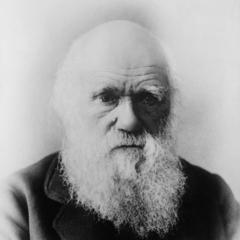
Charles Darwin
Charles Darwin, a British naturalist, is renowned as the founder of evolutionary biology. Born on February 12, 1809, in England, he passed away on April 19, 1882. Darwin is best known for his research on the theory of evolution, which proposed that species evolve through natural selection and survival of the fittest. more
You May Also Like
“If there were more "Planned Parenthoods," there'd be fewer abortions.”
Source: Just As I Thought
Source: Horse Latitudes
Source: Feminists Say the Darndest Things: A Politically Incorrect Professor Confronts "Womyn" on Campus
“A human is killed by accident way less often than a child is made by mistake.”
Source: The Ostrich Factor: Our Population Myopia
Source: So You Want to Talk About Race
Source: So You Want to Talk About Race
Source: Punching the Air