Quotessence
Home / Quotes / Quote by Hilaire Belloc

Quote by Hilaire Belloc

“I say the word " Anti-Semite" is vulgar and pedantic : that I think will be universally admitted. It is also nonsensical. The antagonism to the Jews has nothing to do with any supposed "Semitic" race which probably does not exist any more than do many other modern hypothetical abstractions, and which, anyhow, does not come into the matter. The Anti-Semite is not a man who hates the modern Arabs or the ancient Carthaginians. He is a man who hates Jews.”

Quote by Hilaire Belloc

Work

The Jews

This book delves into the rich tapestry of Jewish heritage, tracing its origins, evolution, and diverse expressions across the globe. It examines the religious, cultural, and social aspects of Jewish life, offering insights into the community's contributions to various fields and its enduring presence in the world. more

Author

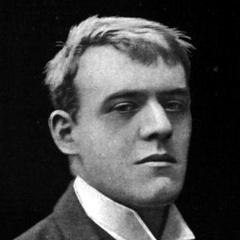
Hilaire Belloc
Hilaire Belloc

Hilaire Belloc was an English writer, poet, and historian, born on July 27, 1870, and died on July 16, 1953. He is recognized for his contributions to poetry, fiction, and political commentary. more

You May Also Like

“I once ventured to say to an old clergyman who was voicing this sort of patriotism, “But, sir, aren’t we told that every people thinks its own men the bravest and its own women the fairest in the world?” He replied with total gravity—he could not have been graver if he had been saying the Creed at the altar—“Yes, but in England it’s true.” To be sure, this conviction had not made my friend (God rest his soul) a villain; only an extremely lovable old ass. It can however produce asses that kick and bite. On the lunatic fringe it may shade off into that popular Racialism which Christianity and science equally forbid.”

“Davie's hostility to sectarianism, and to religious 'fanaticism', was perhaps part of his appeal. He acknowledged the legacy of Calvinism in his interpretation of the Enlightenment and democratic intellectualism, and continued to argue that the distinctive blend of religion, law and education was Scotland's special contribution to civilisation. But by the 1950s and 1960s, the Church of Scotland and its ministers were widely regarded in intellectual circles as a repressive force, morally censorious and culturally philistine. Davie's work, it may be suggested, was attractive to the youthful intelligentsia created by post-war university expansion. Before the war, most Scottish graduates had gone into the professions, the civil service, or school teaching. But now there were new career fields in the media, politics, and college teaching which promoted a less conformist attitude. The Reformation had long been seen as the basis for Scotland's identity and its cultural difference from England, but Davie offered a version of Scottish identity which substituted a secular intellectualism for the well-worn themes of Calvinism and John Knox, and made no appeal, either, to Kailyard sentimentality. Davie became a cult figure for journals like Cencrastus and the New Edinburgh Review, to which he contributed himself.”

“Alexander Kilgour, in true Scottish style, was educated for the Church. At thirty-five he filled a Chair of Divinity. Two members of his Presbytery, before his appointment, were overheard to say, 'We don't want Kilgour of Inverald - he has far too acute a mind for a Professor.' And indeed Alexander, in a short while, had a wasps' bike about his ears. 'As bad as Smith o' Aiberdeen,' cried the critics. Alexander Kilgour, however, had not only the advantage of teaching ten years later than Robertson Smith, he had also the Kilgour habit of success in all he put his hand to. He retained his Chair, silenced the mutterers by tact and suavity, and gave width of outlook to a succession of young Scottish divines. His urbane persuasiveness of manner, however, covered a true prophetic zeal. He was passionate for enlightenment, drunk on the word: though in this matter too the pre-war whiskies were the best. The ageing man would sit with brooding brows over the later distilations.”

“The cause of the protagonist's spiritual crisis in these novels originates in the unloving and unlovely severity of various forms of Presbyterianism. In A Son of the Soil, the Church of Scotland's harshly judgemental and emotionally sterile tendencies are displayed in parishioners' right right to object to 'sitting under' a minister who does not meet their approval. During a minister's probationary period the congregation can object 'to his looks, or his manners, or his doctrines, or the colour of his hair'.”

“What can there be that is splendid in my life? - a farmer's son, with perhaps the chance of a country church as my highest hope - after all kinds od signings, and confessions, and calls, and presbyteries. It would be splendid indeed to be plucked by a country presbytery that didn't know six words of Greek, or objected to by a congregation of ploughmen.”

“I think not that it is in any manner needful for me to write down any history of the Kirk's trials here. Truly, it is an old story in our country of Scotland; and if there should be folk of another land reading this, doubtless they may learn concerning the matter, from many books and histories the reading of which, I doubt not, will be to the edification, to such as, by reason of belonging to another nation, or by reason of neglect in their upbringing, may want a sufficiency of knowledge to distinguish between the old and steadfast Kirk herself, and them that do sometimes iniquitously bear her name.”