Quotessence
Home / Quotes / Quote by Pierre-Joseph Proudhon

Quote by Pierre-Joseph Proudhon

Author
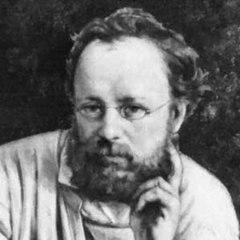
Pierre-Joseph Proudhon

Pierre-Joseph Proudhon (1809-1865) was a French political philosopher, writer, and considered the father of modern anarchism. In 1840, he published "What is Property?" where he famously declared "property is theft," which profoundly influenced socialist and anarchist thought. Proudhon advocated mutualism, opposed capitalist exploitation and state authority, and significantly influenced thinkers like Karl Marx and Mikhail Bakunin. His works including "The Philosophy of Poverty" remain important texts in political philosophy and social theory. more

You May Also Like

“The Overton window is the range of policies politically acceptable to the mainstream population at a given time. It is also known as the window of discourse. The term is named after Joseph P. Overton, who stated that an idea's political viability depends mainly on whether it falls within this range, rather than on politicians' individual preferences. The Overton Window is an approach to identifying the ideas that define the spectrum of acceptability of governmental policies. Politicians can only act within the acceptable range. Shifting the Overton Window involves proponents of policies outside the window persuading the public to expand the window. Proponents of current policies, or similar ones within the window, seek to convince people that policies outside it should be deemed unacceptable. In 1998, Noam Chomsky said: "The smart way to keep people passive and obedient is to strictly limit the spectrum of acceptable opinion, but allow very lively debate within that spectrum—even encourage the more critical and dissident views. That gives people the sense that there's free thinking going on, while all the time the presuppositions of the system are being reinforced by the limits put on the range of the debate.”

“YouTube: “Dr. Jordan Peterson | Is Neo-Marxism on the rise?” I think the group identity game ends in blood. It doesn’t matter who plays it. Left-wingers play it: blood. Right-wingers play it: blood. And lots of it, not just a little of it. You can’t play the identity politics game. Well, so what do you do instead? You live the mythologically heroic life as an individual. That’s the right place to work. And that’s the message of the West, as far as I’m concerned is that we figure that out. We figured out that the collective identity was not the pinnacle statement.”

“pp. 6-7: I want America to return to the ideal of treating people as individuals, so I have to write a book that treats Americans as groups. But there’s no way around it. Those of us who want to defend the American creed have been unwilling to say openly that races have significant group differences. Since we have been unwilling to say that, we have been defenseless against claims that racism is to blame for unequal outcomes. What else could it be? We have been afraid to answer candidly.”

“Page 244: The Jewish involvement in influencing immigration policy in the United States is especially noteworthy as an aspect of ethnic conflict. ... Throughout much of the period from 1881 to 1965, one Jewish interest in liberal immigration policies stemmed from a desire to provide a sanctuary for Jews fleeing from anti-Semitic persecutions in Europe and elsewhere. ... There is also evidence that Jews, much more than any other European-derived ethnic group in the United States, have viewed liberal immigration policies as a mechanism of ensuring that the United States would be a pluralistic rather than a unitary, homogeneous society (e.g., Cohen 1972). ... Pluralism serves internal Jewish interests because it legitimates the internal Jewish interest in rationalizing ... Jewish group commitment and non-assimilation, what Howard Sachar (1992, 427) terms its function in “legitimizing the preservation of a minority culture in the midst of a majority’s host society.” ... Ethnic and religious pluralism also serves external Jewish interests because Jews become just one of many ethnic groups. This results in the diffusion of political and cultural influence among the various ethnic and religious groups, and it becomes difficult or impossible to develop unified, cohesive groups of gentiles united in their opposition to Judaism. Historically, major anti-Semitic movements have tended to erupt in societies that have been, apart from the Jews, religiously or ethnically homogeneous.”

“A land acknowledgement or territorial acknowledgement is a formal statement, often spoken at the beginning of a public event, that it is taking place on land originally inhabited by or belonging to indigenous people. In Canada, land acknowledgements became popular after the 2015 Truth and Reconciliation Commission report (which argued that the country's Indian residential school system had amounted to cultural genocide) and the election of liberal prime minister Justin Trudeau that same year.[2] By 2019, they were a regular practice at events including National Hockey League games, ballet performances and parliament meetings. Critics of land acknowledgements have described them as excesses of political correctness or expressed concerns that they amount to empty gestures that avoid actually addressing the issues of indigenous communities. Ensuring the factual accuracy of acknowledgments can be difficult due to problems like conflicting land claims or unrecorded land exchanges between indigenous groups. In the United States, the practice of land acknowledgements has been described as "catching on" as of 2020.”

“Pathological altruism refers to sincere attempts to help others that instead harms others or oneself and where this harm could have been reasonably anticipated. It is often caused by cognitive and/or emotional biases that blind people to the potentially harmful consequences of their actions. Altruistic intentions must be run through the sieve of rational analysis; all too often, the best long-term action to help others, at both personal and public scales, is not immediately or intuitively obvious, not what temporarily makes us feel good, and not what is being promoted by other individuals, with their own potentially self-serving interests. Indeed, truly altruistic actions may sometimes appear cruel or harmful, the equivalent of saying “no” to the student who demands a higher grade or to the addict who needs another hit. However, the social consequences of appearing cruel in a culture that places high value on kindness, empathy, and altruism can lead us to misplaced “helpful” behavior and result in self-deception regarding the consequences of our actions. In some cases, some people gain some benefit from the altruism, but other people and/or the altruist are harmed in ways that could be reasonably predicted, but are not due to such biases. These altruistic biases may be deliberately exploited by some people in order to gain benefits at the expense of other people. Feelings of self-righteousness and sanctimony have been described as being an intensely pleasurable addiction for some people, which contributes to blind pathological altruism and rejection of logical arguments.”

“Colonial Policy and Practice: A Comparative Study of Burma and Netherlands India by J. S. Furnivall Quoting page 85-87: Lower Burma when first occupied … was a vast deltaic plain of swamp and jungle, with a secure rainfall; when the opening of the canal created a market for rice, this wide expanse of land was rapidly reclaimed by small cultivators … Formerly, the villager in Lower Burma, like peasants in general, cultivated primarily for home consumption, and it has always been the express policy of the Government to encourage peasant proprietorship. Land in the delta was abundant … The opening of the canal provided a certain and profitable market for as much rice as people could grow. … men from Upper Burma crowded down to join in the scramble for land. In two or three years a labourer could save out of his wages enough money to buy cattle and make a start on a modest scale as a landowner. … The land had to be cleared rapidly and hired labour was needed to fell the heavy jungle. In these circumstances newly reclaimed land did not pay the cost of cultivation, and there was a general demand for capital. Burmans, however, lacked the necessary funds, and had no access to capital. They did not know English or English banking methods, and English bankers knew nothing of Burmans or cultivation. … in the ports there were Indian moneylenders of the chettyar caste, amply provided with capital and long accustomed to dealing with European banks in India. About 1880 they began to send out agents into the villages, and supplied the people with all the necessary capital, usually at reasonable rates and, with some qualifications, on sound business principles. … now the chettyars readily supplied the cultivators with all the money that they needed, and with more than all they needed. On business principles the money lender preferred large transactions, and would advance not merely what the cultivator might require but as much as the security would stand. Naturally, the cultivator took all that he could get, and spent the surplus on imported goods. The working of economic forces pressed money on the cultivator; to his own discomfiture, but to the profit of the moneylenders, of European exporters who could ensure supplies by giving out advances, of European importers whose cotton goods and other wares the cultivator could purchase with the surplus of his borrowings, and of the banks which financed the whole economic structure. But at the first reverse, with any failure of the crop, the death of cattle, the illness of the cultivator, or a fall of prices, due either to fluctuations in world prices or to manipulation of the market by the merchants, the cultivator was sold up, and the land passed to the moneylender, who found some other thrifty labourer to take it, leaving part of the purchase price on mortgage, and with two or three years the process was repeated. … As time went on, the purchasers came more and more to be men who looked to making a livelihood from rent, or who wished to make certain of supplies of paddy for their business. … Others also, merchants and shopkeepers, bought land, because they had no other investment for their profits. These trading classes were mainly townsfolk, and for the most part Indians or Chinese. Thus, there was a steady growth of absentee ownership, with the land passing into the hands of foreigners. Usually, however, as soon as one cultivator went bankrupt, his land was taken over by another cultivator, who in turn lost with two or three years his land and cattle and all that he had saved. [By the 1930s] it appeared that practically half the land in Lower Burma was owned by absentees, and in the chief rice-producing districts from two-thirds to nearly three-quarters. … The policy of conserving a peasant proprietary was of no avail against the hard reality of economic forces…”