Quotessence
Home / Quotes / Quote by Bruce Chatwin

Quote by Bruce Chatwin

Work

The Viceroy of Ouidah

Browse quotes and source details for this work. more

Author
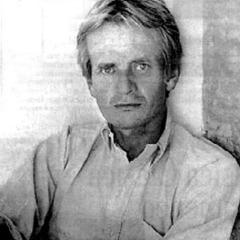
Bruce Chatwin
Bruce Chatwin

Bruce Chatwin was an English novelist known for his unique travel literature and adventure novels. His works often combined history, travel, and anthropology, winning him a wide readership. more

You May Also Like

“See I woke up to this God-body movement, three eyes wide open to this God-mind blueprint. The dynamic of this climax at the peak of a God-conscious is what I seek. Subliminally, I speak fluent, 10 figure mind, I just do it. Life unravels its turmoils and these pen to paper sessions ease my pain and free my mind as I watch the rain, looking through the souls window for a sign. Take you pass the senses into the sixth, take you into a place of paradise and bliss in all but only a few notice.”

“The difference between the having and being modes can be easily observed in two examples of conversations. Let us take a typical conversational debate between two men in which A has opinion X and B has opinion Y.Each identifies with his own opinion. What matters to each is to find better, i.e., more reasonable, arguments to defend his opinion. Neither expects to change his own opinion, or that his opponent's opinion will change. Each is afraid of changing his own opinion, precisely because it is one of his possessions, and hence its loss would mean an impoverishment.”

“Today, we are not just inmates or victims in a foreign-controlled digital panoptic. Originally, the Panoptikum was a prison-like building designed by Jeremy Bentham. The prisoners in the outer ring are guarded by a central surveillance tower. In the digital panoptic, we are not just caught. We are ourselves perpetrators. We are actively involved in the digital panopticon. We even entertain it by cableing ourselves to the body like the millions of quantified self-movements and voluntarily putting our body-related data into the web. The new rule does not silence us. Rather, she is constantly calling on us to communicate, to share, to communicate our opinions, needs, wishes and preferences, to tell our lives.”