“The difference between the having and being modes can be easily observed in two examples of conversations. Let us take a typical conversational debate between two men in which A has opinion X and B has opinion Y.Each identifies with his own opinion. What matters to each is to find better, i.e., more reasonable, arguments to defend his opinion. Neither expects to change his own opinion, or that his opponent's opinion will change. Each is afraid of changing his own opinion, precisely because it is one of his possessions, and hence its loss would mean an impoverishment.”
Quote by Erich Fromm
Work
To Have or to Be? The Nature of the Psyche
Browse quotes and source details for this work. more
Author
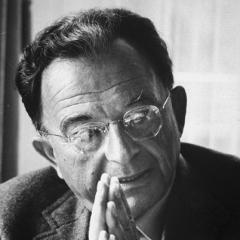
Erich Fromm
Erich Fromm, born on March 23, 1900 in Germany and died on March 18, 1980, was a renowned psychologist. His research covered a wide range of fields including anthropology, philosophy, and religion, particularly known for his studies on human psychology and interpersonal relationships. more
You May Also Like
Source: One Heart's Journey: Lyrics of an Imperfect Life
Source: The Fate of Ten
Source: The Morning Side of Dawn
Source: Awakened Empath: The Ultimate Guide to Emotional, Psychological and Spiritual Healing
Source: Composing a Life