Quotessence
Home / Quotes / Quote by Gustave Flaubert

Quote by Gustave Flaubert

Work

madame bovary

Gustave Flaubert's Madame Bovary is a seminal work of 19th-century French literature. The novel follows the life of Emma Bovary, a woman who is discontent with her provincial life and marries Charles Bovary, a dull and unambitious country doctor. Emma's dissatisfaction leads her to seek fulfillment through romantic escapades and extramarital affairs, ultimately leading to disaster. Flaubert's meticulous attention to detail and his exploration of themes such as social class, materialism, and the human condition have made this novel a classic of world literature. more
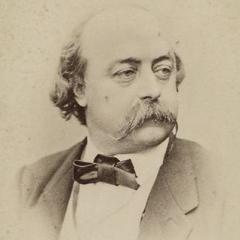
Author

Gustave Flaubert
Gustave Flaubert

Gustave Flaubert, born on December 12, 1821 and died on May 8, 1880, was a prominent French writer of the 19th century. Known for his exquisite literary skills and profound psychological portrayals, Flaubert is best remembered for his masterpiece 'Madame Bovary'. more

You May Also Like

“Many men remain spoiled boys that have never grown up. Women are prepared to raise them and take pain with patience, both as a condescendant contribution to supercilious compassion and as a proof of the eminence of their sense of worth. ("Prêt-à-penser" / "Ready-to-wear thinking")”

“Oh, what strange wonderful clocks women are. They nest in Time. They make the flesh that holds fast and binds eternity. They live inside the gift, know power, accept, and need not mention it. Why speak of time when you are Time, and shape the universal moments, as they pass, into warmth and action? How men envy and often hate these warm clocks, these wives, who know they will live forever.”

“An offering for the sake of offering, perhaps. Anyhow, it was her gift. Nothing else had she of the slightest importance; could not think, write, even play the piano. She muddled Armenians and Turks; loved success; hated discomfort; must be liked; talked oceans of nonsense: and to this day, ask her what the Equator was, and she did not know. All the same, that one day should follow another; Wednesday, Thursday, Friday, Saturday; that one should wake up in the morning; see the sky; walk in the park; meet Hugh Whitbread; then suddenly in came Peter; then these roses; it was enough. After that, how unbelievable death was!-that it must end; and no one in the whole world would know how she had loved it all; how, every instant . . .”

“Wine and women make wise men dote and forsake God's law and do wrong." However, the fault is not in the wine, and often not in the woman. The fault is in the one who misuses the wine or the woman or other of God's crations. Even if you get drunk on the wine and through this greed you lapse into lechery, the wine is not to blame but you are, in being unable or unwilling to discipline yourself. And even if you look at a woman and become caught up in her beauty and assent to sin [= adultery; extramarital sex], the woman is not to blame nor is the beauty given her by God to be disparaged: rather, you are to blame for not keeping your heart more clear of wicked thoughts. ... If you feel yourself tempted by the sight of a woman, control your gaze better ... You are free to leave her. Nothing constrains you to commit lechery but your own lecherous heart.”