Quotessence
Home / Quotes / Quote by Aristotle

Quote by Aristotle

“The proud man, then, is an extreme in respect of the greatness of his claims, but a mean in respect of the rightness of them; for he claims what is accordance with his merits, while the others go to excess or fall short.”

Quote by Aristotle

Author
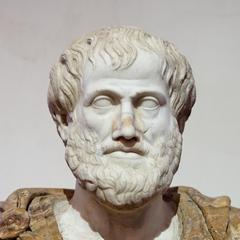
Aristotle
Aristotle

Aristotle, a renowned Greek philosopher, is one of the founders of Western philosophy. His thoughts covered a wide range of fields, including ethics, logic, politics, and had a profound impact on the world. more

You May Also Like

“How many times do we take credit for the work of our own hands, believing we are working harder and smarter than everyone else, and that somehow we deserve the success we have achieved? Like Nebuchadnezzar, I have basked in my own success and declared my perceived value with only a mere hat-tip to the Creator of it all. I've been full of myself, full of my pride. And like King Nebuchadnezzar, I have stood on the brink of disaster without a worry in the world. "While the word was in the king's mouth, a voice came from heaven, saying, 'King Nebuchadnezzar, to you it is declared: sovereignty has been removed from you'" (Daniel 4:31). The word sovereignty here means the ability to rule the kingdom. The verse is startling. While the boastful words are still in the kings mouth, God takes Nebuchadnezzar's kingdom away from him. In an instant . Wow! Most of my failures have taken some time for the consequences to kick in, but I wonder if there was an instant, while the words were still in my mouth, when the Father determined--at that very moment--so strip me of my kingdom. Perhaps you have witnessed (or experienced) a similar kingdom-stripping.”

“The problem with working, I mean not self-employed, is that you have to get up and routinely do something that you do not want to do, plus you get talked down to, ordered around by twats, you know you are better than. In reality, you are no better than a slave, no better than a hamster running on a wheel. You could say the hamster likes to run on the wheel, the hamster runs on the wheel by choice. But do not forget, the hamster is always in a cage, and will never be anything else, but a hamster running on a wheel inside a cage, unless it escapes the cage.”

“But your lolas took offense at being called witches. That is an Amerikano term, they scoff, and that they live in the boroughs of an American city makes no difference to their biases. Mangkukulam was what they styled themselves as, a title still spoken of with fear in their motherland, with its suggestions of strange healing and old-world sorcery. Nobody calls their place along Pepper Street Old Manila, either, save for the women and their frequent customers. It was a carinderia, a simple eatery folded into three food stalls; each manned by a mangkukulam, each offering unusual specialties: Lola Teodora served kare-kare, a healthy medley of eggplant, okra, winged beans, chili peppers, oxtail, and tripe, all simmered in a rich peanut sauce and sprinkled generously with chopped crackling pork rinds. Lola Teodora was made of cumin, and her clients tiptoed into her stall, meek as mice and trembling besides, only to stride out half an hour later bursting at the seams with confidence. But bagoong- the fermented-shrimp sauce served alongside the dish- was the real secret; for every pound of sardines you packed into the glass jars you added over three times that weight in salt and magic. In six months, the collected brine would turn reddish and pungent, the proper scent for courage. unlike the other mangkukulam, Lola Teodora's meal had only one regular serving, no specials. No harm in encouraging a little bravery in everyone, she said, and with her careful preparations it would cause little harm, even if clients ate it all day long. Lola Florabel was made of paprika and sold sisig: garlic, onions, chili peppers, and finely chopped vinegar-marinated pork and chicken liver, all served on a sizzling plate with a fried egg on top and calamansi for garnish. Sisig regular was one of the more popular dishes, though a few had blanched upon learning the meat was made from boiled pigs' cheeks and head.”

“Mr. Leopold Bloom ate with relish the inner organs of beasts and fowls,'" he's saying, bending over to gaze down into the deli case. His breath is fogging the glass. I'm watching it suddenly. Watching him. "'He liked thick giblet soup, nutty gizzards, a stuffed roast heart-'" "'Liverslices fried with crustcrumbs, fried hencods' roes,'" I say, and I'm sure I sound a little stunned. I'm not used to boys coming into the deli to quote some of my favorite modernist literature. Even I can't resist that. A boy like him, who, from the first moment, seems to love the things I love.”