Quotessence
Home / Quotes / Quote by Maurice Maeterlinck

Quote by Maurice Maeterlinck

Work

Wisdom and Destiny

This book delves into the philosophical and existential aspects of wisdom and its role in shaping one's destiny. It examines how individuals navigate life's challenges and opportunities through the lens of wisdom, considering both internal and external factors. more
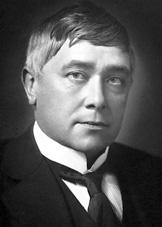
Author

Maurice Maeterlinck
Maurice Maeterlinck

Maurice Maeterlinck, born on August 29, 1862, and died on May 6, 1949, was a renowned Belgian playwright, poet, and essayist. He is best known for his symbolism and symbolic drama, which deeply explored themes such as life, death, religion, and the universe. Maeterlinck's works have had a profound impact on 20th-century literature. more

You May Also Like

“Democracy is cancerous, and bureaus are its cancer. A bureau takes root anywhere in the state, turns malignant like the Narcotic Bureau, and grows and grows, always reproducing more of its own kind, until it chokes the host if not controlled or excised. Bureaus cannot live without a host, being true parasitic organisms. (A cooperative on the other hand can live without the state. That is the road to follow. The building up of independent units to meet needs of the people who participate in the functioning of the unit. A bureau operates on opposite principles of inventing needs to justify its existence.) Bureaucracy is wrong as a cancer, a turning away from the human evolutionary direction of infinite potentials and differentiation and independent spontaneous action to the complete parasitism of a virus. (It is thought that the virus is a degeneration from more complex life-form. It may at one time have been capable of independent life. Now has fallen to the borderline between living and dead matter. It can exhibit living qualities only in a host, by using the life of another — the renunciation of life itself, a falling towards inorganic, inflexible machine, towards dead matter.) Bureaus die when the structure of the state collapse. They are as helpless and unfit for independent existence as a displaced tapeworm, or a virus that has killed the host.”

“Mermaids weren't mammalian. They couldn't be. Too many sightings focused on their 'slender backs' and 'narrow waists'--features that seemed reasonable to modern readers with modern beauty standards, but which made no sense for an Italian fisherman during the plague years, or a Puerto Rican swimmer in the 1920s. If the mermaid had been an idealized projection of a human woman onto a marine mammal, she would have looked different every time, fat during some eras, thin during others, not consistently slim to the point of freezing in oceanic waters. The people who described mermaids were describing a real creature, something that wasn't mammalian, but looked mammalian enough to make a tempting lure. And why would anything lure sailors, if not as a form of sustenance?”