Quotessence
Home / Quotes / Quote by Lysander Spooner

Quote by Lysander Spooner

“No man can rightfully be required to join, or support, an association whose protection he does not desire.”

Quote by Lysander Spooner

Author
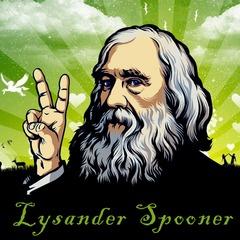
Lysander Spooner
Lysander Spooner

Lysander Spooner was an American philosopher, abolitionist, and legal theorist who lived from January 19, 1808, to May 14, 1887. He is recognized for his contributions to the philosophy of individual rights and his advocacy for the abolition of slavery. Spooner's work has had a profound impact on the fields of law and philosophy. more

You May Also Like

“Freedom, however, is not the last word. Freedom is only part of the story and half of the truth. Freedom is but the negative aspect of the whole phenomenon whose positive aspect is responsibleness. In fact, freedom is in danger of degenerating into mere arbitrariness unless it is lived in terms of responsibleness. That is why I recommend that the Statue of Liberty on the East Coast be supplemented by a Statue of Responsibility on the West Coast.”

“73. ...There is no law that says we have to go to work every day and follow our employer’s orders. Legally there is nothing to prevent us from going to live in the wild like primitive people or from going into business for ourselves. But in practice there is very little wild country left, and there is room in the economy for only a limited number of small business owners. Hence most of us can survive only as someone else’s employee.”

“The cat-and-mouse scenery is not only about animals, but about our human condition. How do we live, how we are played, and how we might become the cat to another’s mouse? Play and malice, freedom and inescapability, survival and destruction are entwined. The trap is not only external. It is also within us, in the desires that ensnare us, the illusions we follow, and the systems we occupy. ( ‘The Mousetrap”)”

“She had not understood what it had been like for him to live his entire life underground, chained and beaten and crippled—until then. Until she heard that noise of undiluted, unyielding joy. Until she echoed it, tipping her head back to the clouds around them. They sailed over a sea of clouds, and Abraxos dipped his claws in them before tilting to race up a wind-carved column of cloud. Higher and higher, until they reached its peak and he flung out his wings in the freezing, thin sky, stopping the world entirely for a heartbeat. And Manon, because no one was watching, because she did not care, flung out her arms as well and savored the freefall, the wind now a song in her ears, in her shriveled heart.”

“The free spirit again draws near to life - slowly, to be sure, almost reluctantly, almost mistrustfully. It again grows warmer about him, yellower as it were; feeling and feeling for others acquire depth, warm breezes of all kind blow across him. It seems to him as if his eyes are only now open to what is close at hand. he is astonished and sits silent: where had he been? These close and closest things: how changed they seem! what bloom and magic they have acquired! He looks back gratefully - grateful to his wandering, to his hardness and self-alienation, to his viewing of far distances and bird-like flights in cold heights. What a good thing he had not always stayed "at home," stayed "under his own roof" like a delicate apathetic loafer! He had been -beside himself-: no doubt about that. Only now does he see himself - and what surprises he experiences as he does so! What unprecedented shudders! What happiness even in the weariness, the old sickness, the relapses of the convalescent! How he loves to sit sadly still, to spin out patience, to lie in the sun! Who understands as he does the joy that comes in winter, the spots of sunlight on the wall! They are the most grateful animals in the world, also the most modest, these convalescents and lizards again half-turned towards life: - there are some among them who allow no day to pass without hanging a little song of praise on the hem of its departing robe. And to speak seriously: to become sick in the manner of these free spirits, to remain sick for a long time and then, slowly, slowly, to become healthy, by which I mean "healthier," is a fundamental cure for all pessimism.”