Quotessence
Home / Quotes / Quote by Virgil

Quote by Virgil

Work

The Aeneid

The Aeneid is an epic poem written by the ancient Roman poet Virgil. It narrates the journey of Aeneas, a Trojan hero, after the fall of Troy, his travels, and his eventual establishment of the city of Rome. The poem is renowned for its rich symbolism, complex characters, and profound exploration of themes such as fate, duty, and the human condition. more
Author

Virgil
Virgil

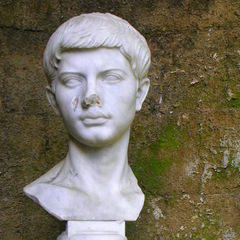
Virgil, a Roman poet, was born on October 15, 70 BC and died on September 21, 19 BC. He is one of the greatest poets in ancient Rome and is known for his epic poem, 'The Aeneid'. more

You May Also Like

“The fist clenched round my heart loosens a little, and I gasp brightness; but it tightens again. When have I ever not loved the pain of love? But this has moved past love to mania. This has the strong clench of the madman, this is gripping the ledge of unreason, before plunging howling into the abyss. Hold hard then, heart. This way at least you live.”

“I arrive, by a snow-covered path, at a kind of chateau. The room I enter by is covered all over with several inches of snow - even on the furniture and the ceiling. Shining in through the window are fierce, fluorescent advertisements in blue and red. I walk through the huge rooms secretively. I once lived here. Voices come near. I feel worried, since these are important men and I have no right to be here. But their voices change, their eyes change too, and suddenly they become mental defectives. The mansion is an asylum and indeed a nurse is stretched out on a long table in the peristyle. I wake up, retaining an exact impression of having once been mad myself in this very place, in a previous life.”

“I feel too much. To feel too much is unhealthy. But an excess of sensitivity is the paint that colors the tormented castle of genius. All human greatness is pathological in origin. My suffering breathes life into me, more and more life, more life than I can deal with. It allows me to travel to places I might never otherwise have visited: places in the mind, in the soul, in the mythic layers of unspoken fears. It is the source of my secret strength. It is a strength of which even Nimue cannot deprive me.”

“Melrose Avenue, Santa Monica - Dialogue on a terrace. SHE: You are jealous ? Are you jealous ? You are fucking jealous! . . . Let me say . . . You 're twenty and I am forty-two, and I'll give my fucking ass to fucking anybody . . . Do you know that? * He gets up, crosses Melrose for no reason, comes back, kneels down in front of her (younger, but as theatrical). HE: Do you love me? Do you love me? SHE: Yes . . . Yes, I love you . . . The Italian kneads his meatballs. An Indian is playing a video game and its shrill soundtrack provides a backing to the conversation. The woman herself speaks in a shrill, hysterical voice. It is pleasant in Los Angeles in November, on the Melrose terrace, around the middle of the night. Everyone is smiling somewhere. No passion. A scene American-style. The waiter takes the car keys and drags off the woman, who shows off her black-stockinged legs and pretends to be mad. A black man gets up and, as he passes, says to me: ' Too much love! ' Gliding along the road that runs beside the coast in a black Porsche is like penetrating slowly into the inside of your own body.”