“From the first day I met her, she was the only woman to me. Every day of that voyage I loved her more, and many a time since have I kneeled down in the darkness of the night watch and kissed the deck of that ship because I knew her dear feet had trod it. She was never engaged to me. She treated me as fairly as ever a woman treated a man. I have no complaint to make. It was all love on my side, and all good comradeship and friendship on hers. When we parted she was a free woman, but I could never again be a free man.”
Quote by Arthur Conan Doyle
Work
The Return of Sherlock Holmes
This book is a compilation of twelve short stories that showcase the intellectual prowess and deductive reasoning of the renowned detective Sherlock Holmes. These tales delve into a variety of intriguing cases, showcasing Holmes's exceptional ability to unravel complex situations through meticulous observation and logical analysis. more
Author
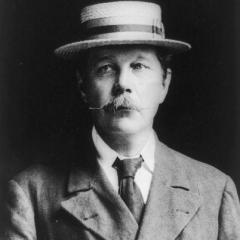
Arthur Conan Doyle
Arthur Conan Doyle, born on May 22, 1859 in Edinburgh, Scotland, was a renowned Scottish physician and writer. He is best known for his creation of the Sherlock Holmes series of detective novels, which have had a profound impact on the development of detective fiction and played a crucial role in shaping modern detective culture. more
You May Also Like
Source: Twisted Kingdom
Source: Hit Refresh: The Quest to Rediscover Microsoft's Soul and Imagine a Better Future for Everyone
Source: The Eden Fruitarian Guidebook
Source: What Doctors Feel: How Emotions Affect the Practice of Medicine
Source: What Doctors Feel: How Emotions Affect the Practice of Medicine
Source: Men, Women, and Worthiness: The Experience of Shame and the Power of Being Enough
Source: What Doctors Feel: How Emotions Affect the Practice of Medicine
Source: Against Empathy: The Case for Rational Compassion
Source: Before They Pass Away