Quotessence
Home / Quotes / Quote by Min Jin Lee

Quote by Min Jin Lee

“All her life, Sunja had heard this sentiment from other women, that they must suffer-- suffer as a girl, suffer as a wife, suffer as a mother-- die suffering. Go-saeng-- the word made her sick. What else was there besides this? She had suffered to create a better life for Noa, and yet it was not enough. Should she have taught her son to suffer the humiliation that she'd drunk like water? In the end, he had refused to suffer the conditions of his birth. Did mothers fail by not telling their sons that suffering would come?”

Quote by Min Jin Lee

Work

Pachinko

Browse quotes and source details for this work. more

Author

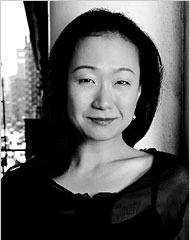
Min Jin Lee
Min Jin Lee

Min Jin Lee, born in 1968, is a talented writer known for her delicate emotions and profound insights into the lives of Asian immigrants and their descendants. Her debut novel, 'Pachinko', received widespread acclaim and won multiple literary awards. more

You May Also Like

“If one's heart is small, all their sufferings even as large as a house can only be crammed in that small corner. But if one's heart were as vast as heaven and earth, then even if their troubles were as large as a mountain, they would become nothing more than a droplet of water in the endless sea. 心有一隅,房子大的烦恼就只能挤在一隅中,心有四方天地,山大的烦恼也不过是沧海一粟”

“When identity is derived from projecting an image in the public realm, something is lost, some core of identity diluted, some sense of authority or interiority sacrificed. It is time to question the false equivalency between not being seen and hiding. And time to reevaluate the merits of the inconspicuous life, to search out some antidote to continuous exposure, and to reconsider the value of going unseen, undetected, or overlooked in this new world. Might invisibility be regarded not simply as refuge, but as a condition with its own meaning and power? Going unseen may be becoming a sign of decency and self-assurance. The impulse to escape notice is not about complacent isolation or senseless conformity, but about maintaining identity, propriety, autonomy, and voice. It is not about retreating from the digital world but about finding some genuine alternative to a life of perpetual display. It is not about mindless effacement but mindful awareness. Neither disgraceful nor discrediting, such obscurity can be vital to our very sense of being, a way of fitting in with the immediate social, cultural, or environmental landscape. Human endeavor can be something interior, private, and self-contained. We can gain, rather than suffer, from deep reserve.”

“The root of our problems is within our mind. It is our unskillful ways of thinking. We have to recognize the right ways of thinking, which bring happiness, and the wrong ways of thinking, which bring suffering. With one way of thinking, we have problems in our life; with another way of thinking, we don't. In other words, happiness and suffering come from our own mind. Our mind creates our life.”