Quotessence
Home / Quotes / Quote by Kobayashi Issa

Quote by Kobayashi Issa

Author

Kobayashi Issa
Kobayashi Issa

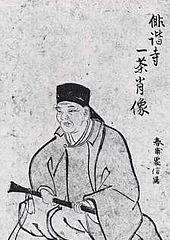
Kobayashi Issa was a prominent Japanese haiku poet from the Edo period. Born on June 15, 1763, in Kashiwazaki village, he is celebrated for his concise and evocative haiku that often reflect the simplicity and beauty of nature. Issa's poetry is known for its depth of emotion and its ability to capture the fleeting moments of life. He passed away on January 5, 1828. more

You May Also Like

“In one form or the other, the quest for human dignity has proved to be one of the most propulsive elements for wars, civil strife and willing sacrifice. Yet the entitlement to dignity, enshrined among the 'human rights', does not aspire to being the most self-evident, essential need for human survival, such as food, or physical health. Compared to that other candidate for the basic impulse of human existence - self-preservation - it may even be deemed self-indulgent.”

“the very least we can live with is an agreement that does not reduce us to slaves of imposition, but makes us partners of consent. Yes, we are compelled to make peace, we submit to force majeure, but leave us at least a piece of clothing to cover our nudity. This is the motivation behind every formula of diplomatic contrivance that is sometimes described as face-saving, and wise indeed is the victor who knows that, in order to shield his own rear from the elements, he must not denude his opponents.”

“It is the lowered head that makes her seem less noble than, say, a horse, or a deer surprised in the woods. More exactly, it is her lowered head and neck. As she stands still, the top of her head is level with her back, or even a little lower, and so she seems to be hanging her head in discouragement, embarrassment, or shame. There is at least a suggestion of humility and dullness about her. But all these suggestions are false.”

“Вместо возможной зависимости, вынужденного возврата к прежней жизни, состоящей из компромиссов и уступок, она увидела перед собой — когда решит выбрать их — свободу, силу и достоинство. ...которое в таком мире, как их мир, могут обеспечить лишь богатство и положение в обществе. (Сюзи Бранч)”