Quotessence
Home / Quotes / Quote by Sherman Alexie

Quote by Sherman Alexie

“All of the Indians must have tragic features: tragic noses, eyes, and arms. Their hands and fingers must be tragic when they reach for tragic food. The hero must be a half-breed, half white and half Indian, preferably from a horse culture. He should often weep alone. That is mandatory. If the hero is an Indian woman, she is beautiful. She must be slender and in love with a white man. But if she loves an Indian man then he must be a half-breed, preferably from a horse culture. If the Indian woman loves a white man, then he has to be so white that we can see the blue veins running through his skin like rivers. When the Indian woman steps out of her dress, the white man gasps at the endless beauty of her brown skin. She should be compared to nature: brown hills, mountains, fertile valleys, dewy grass, wind, and clear water. If she is compared to murky water, however, then she must have a secret. Indians always have secrets, which are carefully and slowly revealed. Yet Indian secrets can be disclosed suddenly, like a storm. Indian men, of course, are storms. The should destroy the lives of any white women who choose to love them. All white women love Indian men. That is always the case. White women feign disgust at the savage in blue jeans and T-shirt, but secretly lust after him. White women dream about half-breed Indian men from horse cultures. Indian men are horses, smelling wild and gamey. When the Indian man unbuttons his pants, the white woman should think of topsoil. There must be one murder, one suicide, one attempted rape. Alcohol should be consumed. Cars must be driven at high speeds. Indians must see visions. White people can have the same visions if they are in love with Indians. If a white person loves an Indian then the white person is Indian by proximity. White people must carry an Indian deep inside themselves. Those interior Indians are half-breed and obviously from horse cultures. If the interior Indian is male then he must be a warrior, especially if he is inside a white man. If the interior Indian is female, then she must be a healer, especially if she is inside a white woman. Sometimes there are complications. An Indian man can be hidden inside a white woman. An Indian woman can be hidden inside a white man. In these rare instances, everybody is a half-breed struggling to learn more about his or her horse culture. There must be redemption, of course, and sins must be forgiven. For this, we need children. A white child and an Indian child, gender not important, should express deep affection in a childlike way. In the Great American Indian novel, when it is finally written, all of the white people will be Indians and all of the Indians will be ghosts.”

Quote by Sherman Alexie

Author
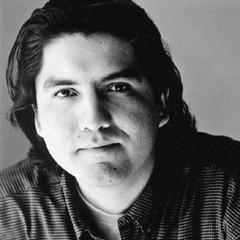
Sherman Alexie
Sherman Alexie

Sherman Alexie is an American poet, writer, and actor, known for his works that reflect the life of Native Americans. He was born on October 7, 1966, and grew up in the Confederated Tribes of the Umatilla Indian Reservation in Rainier, Washington. more

You May Also Like

“1 Cain lifts Crow, that heavy black bird and strikes down Abel. Damn, says Crow, I guess this is just the beginning. 2 The white man, disguised as a falcon, swoops in and yet again steals a salmon from Crow's talons. Damn, says Crow, if I could swim I would have fled this country years ago. 3 The Crow God as depicted in all of the reliable Crow bibles looks exactly like a Crow. Damn, says Crow, this makes it so much easier to worship myself. 4 Among the ashes of Jericho, Crow sacrifices his firstborn son. Damn, says Crow, a million nests are soaked with blood. 5 When Crows fight Crows the sky fills with beaks and talons. Damn, says Crow, it's raining feathers. 6 Crow flies around the reservation and collects empty beer bottles but they are so heavy he can only carry one at a time. So, one by one, he returns them but gets only five cents a bottle. Damn, says Crow, redemption is not easy. 7 Crow rides a pale horse into a crowded powwow but none of the Indian panic. Damn, says Crow, I guess they already live near the end of the world.”

“The white woman across the aisle from me says 'Look, look at all the history, that house on the hill there is over two hundred years old, ' as she points out the window past me into what she has been taught. I have learned little more about American history during my few days back East than what I expected and far less of what we should all know of the tribal stories whose architecture is 15,000 years older than the corners of the house that sits museumed on the hill. 'Walden Pond, ' the woman on the train asks, 'Did you see Walden Pond? ' and I don't have a cruel enough heart to break her own by telling her there are five Walden Ponds on my little reservation out West and at least a hundred more surrounding Spokane, the city I pretended to call my home. 'Listen, ' I could have told her. 'I don't give a shit about Walden. I know the Indians were living stories around that pond before Walden's grandparents were born and before his grandparents' grandparents were born. I'm tired of hearing about Don-fucking-Henley saving it, too, because that's redundant. If Don Henley's brothers and sisters and mothers and father hadn't come here in the first place then nothing would need to be saved.' But I didn't say a word to the woman about Walden Pond because she smiled so much and seemed delighted that I thought to bring her an orange juice back from the food car. I respect elders of every color. All I really did was eat my tasteless sandwich, drink my Diet Pepsi and nod my head whenever the woman pointed out another little piece of her country's history while I, as all Indians have done since this war began, made plans for what I would do and say the next time somebody from the enemy thought I was one of their own.”

“And there are millions of teens who read because they are sad and lonely and enraged. They read becuase they live in an often-terrible world. They read becuause they believe, despire the callow protestations of certain adults, that books-especially the dark and dangerous ones-will save them. As a child, I read because books-violent and not, blasphemous and not, terrifying and not-were the most loving and trustworthy things in my life. I read widely, and loved plenty of the classics so, yes, I recognized the domestic terrors faced by Lousia May Alcott's March sisters. But I became the kids chased by werewolves, vampires and evil clowns in Stephen King's books. I read books about monsters and monsterous things, often written with monstrous language, becuase they taught me how to battle the real monsters in my life. And now i write books for teenagers because I vividly remember what it felt like to be a teen facing everyday and epic dangers. I don't write to protect them. It's far to late for that. I write to give them weapons-in the form of wors and ideas-that will help them fight their monsters. I write in blood because I remember what it felt like to bleed.”

“Last night I missed two free throws which would have won the game against the best team in the state. The farm town high school I play for is nicknamed the "Indians," and I'm probably the only actual Indian ever to play for a team with such a mascot. This morning I pick up the sports page and read the headline: INDIANS LOSE AGAIN. Go ahead and tell me none of this is supposed to hurt me very much.”