Quotessence
Home / Quotes / Quote by Rainer Maria Rilke

Quote by Rainer Maria Rilke

“And we continually outrun their messengers, for long now too slow for us. We solely depend on one another now, but without knowing one another. Our paths no longer trace delicate meanders, But are plotted by degrees.”

Quote by Rainer Maria Rilke

Work

Sonnets to Orpheus

Sonnets to Orpheus is a poetic work that delves into the emotional depths of love and the enduring power of human emotion. The author uses the myth of Orpheus, a figure from Greek mythology known for his musical prowess and tragic love story, as a backdrop for a series of sonnets. These sonnets reflect on themes such as unrequited love, the pain of separation, and the quest for redemption. The work is characterized by its rich imagery and profound emotional resonance, offering readers a contemplative journey through the complexities of the human heart. more
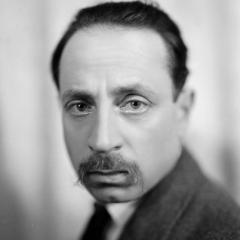
Author

Rainer Maria Rilke
Rainer Maria Rilke

German poet known for his profound poetry and epistolary works. Rainer Maria Rilke's poetry style is unique, often exploring themes such as loneliness, love, and religious faith. more

You May Also Like

“I wasn't afraid to go into business for my self. I once spent 3 years making a loss and not making money. I applaud my self for that because I was going through grooming that law school could not give me .I have reinvented my self enough times and I kept on going. I kept the passion and believing in the future even though others did not I have been broke and in debt in the tens of thousands , I have gone through hand to mouth and mouth to the Superbowl. I have failed in business and yes I have succeeded too. I am not afraid of failure ,ridicule ,criticism, or being laughed at. I remain strong going hard against all odds cashing in from the creations of my mind with no doubt or turning back My name is Tare Munzara I am Professional dreamer. What are you?”

“...a social state in which only a few are ever becoming richer, and many poorer, and in which the majority of the middle-class can barely maintain their standing by a life-and-death struggle, is certainly adapted to raise the question, whether immense accumulations of property are, in a densely-populated country like ours, compatible with social welfare. When, especially, we contemplate the progressive depression of such large masses of the people in our own times, we need not wonder that the most fundamental questions as to property have been raised. Nay, when we review the fearful wrongs to which the masses have been subjected in every European nation - the iniquity which has obtained in social usage, and been 'established by public law' - we will not feel very much surprised to find that, what we have been accustomed to regard as the corner-stone of civilisation - the institution of private property - has been assailed with a vehemence which has sought its ultimate expression in the tremendous aphorism of the great French Socialist, Proudhon, that 'Property is Theft'.”