“The ridge of the Lammer-muir hills... consists of primary micaceous schistus, and extends from St Abb's head westward... The sea-coast affords a transverse section of this alpine tract at its eastern extremity, and exhibits the change from the primary to the secondary strata... Dr HUTTON wished particularly to examine the latter of these, and on this occasion Sir JAMES HALL and I had the pleasure to accompany him. We sailed in a boat from Dunglass ... We made for a high rocky point or head-land, the SICCAR ... On landing at this point, we found that we actually trode [sic] on the primeval rock... It is here a micaceous schistus, in beds nearly vertical, highly indurated, and stretching from S.E. to N. W. The surface of this rock... has thin covering of red horizontal sandstone laid over it, ... Here, therefore, the immediate contact of the two rocks is not only visible, but is curiously dissected and laid open by the action of the waves... On us who saw these phenomena for the first time, the impression will not easily be forgotten. The palpable evidence presented to us, of one of the most extraordinary and important facts in the natural history of the earth, gave a reality and substance to those theoretical speculations, which, however probable had never till now been directly authenticated by the testimony of the senses... What clearer evidence could we have had of the different formation of these rocks, and of the long interval which separated their formation, had we actually seen them emerging from the bosom of the deep? ... The mind seemed to grow giddy by looking so far into the abyss of time; and while we listened with earnestness and admiration to the philosopher who was now unfolding to us the order and series of these wonderful events, we became sensible how much farther reason may sometimes go than imagination can venture to follow.”
Quote by John Playfair
Work
Biographical Account of James Hutton, M.D. F.R.S. Ed.
Browse quotes and source details for this work. more
Author
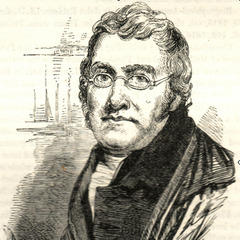
John Playfair
John Playfair (March 10, 1748 - July 20, 1819) was a Scottish scientist known for his significant contributions to geology, mathematics, and philosophy. He was a pioneer in the field of geology and made important contributions to the development of the discipline. more
You May Also Like
“London on a gloomy and rainy day is still better than San Francisco on a bright and sunny day.”
Source: Destiny of Liberty
Source: Catawampusland
“Can we put a "fish-only" sign in a forest!”
Source: Quote: +/-
Source: The Forgotten Garden
Source: Airman's Odyssey
“To truly love someone, we must accept the real version of them, scars and all.”
Source: The Paris Agent