Quotessence
Home / Quotes / Quote by Pierre-Joseph Proudhon

Quote by Pierre-Joseph Proudhon

Work

Théorie de la propriété

Browse quotes and source details for this work. more

Author
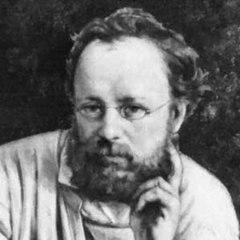
Pierre-Joseph Proudhon

Pierre-Joseph Proudhon (1809-1865) was a French political philosopher, writer, and considered the father of modern anarchism. In 1840, he published "What is Property?" where he famously declared "property is theft," which profoundly influenced socialist and anarchist thought. Proudhon advocated mutualism, opposed capitalist exploitation and state authority, and significantly influenced thinkers like Karl Marx and Mikhail Bakunin. His works including "The Philosophy of Poverty" remain important texts in political philosophy and social theory. more

You May Also Like

“When I’m given a role, the first thing I do is read the play over and over again. I scour the script and write down everything the character says about himself and everything that everyone else says about him. I immerse myself in my character and imagine what it might be like to be that person. When I played Cassio in Othello I imagined what it would be like to be a lieutenant in the Venetian navy in 1604. I sat down with Ewan McGregor and Chiwetel Ejiofor and together we decided that Othello, Iago and Cassio had soldiery in their bones. I took from the script that Cassio was talented and ambitious, with no emotional or physical guard - and that’s how I played the part. For me, acting is about recreating the circumstances that would make me feel how my character is feeling. In the dressing room, I practise recreating those circumstances in my head and I try to not get in the way of myself. For example, in act two of Othello, when Cassio is manipulated to fight Roderigo and loses his rank, some nights I would burst into tears; other nights I wouldn’t but I would still feel the same emotion, night after night. Just as in life, the way we respond to catastrophe or death will be different every time because the process is unconscious. By comparison, in Chekhov’s Ivanov I played the young doctor, Lvov. Lvov was described as “a prig and a bigot … uprightness in boots … tiresome … completely sincere”. His emotions were locked away. I worked around the key phrase: “Forgive me, I’m going to tell you plainly.” I practised speaking gravely and sincerely without emotion and I actually noticed how that carried over into my personal life: when I played the open-hearted Cassio, I felt really free; when I played the pent-up Lvov, I felt a real need to release myself from the shackles of that character. It’s exhilarating to act out the emotions of a character - it’s a bit like being a child again. You flex the same muscles that you did when you pretended to be a cowboy or a policeman: acting is a grown-up version of that with more subtlety and detail. You’re responding with real emotions to imaginary situations. When I’m in a production I never have a day when I haven’t laughed, cried or screamed. There are times when I wake up stiff from emotional exhaustion. Film is a much more intimate and thoughtful medium than theatre because of the proximity of the camera. The camera can read your thoughts. On stage, if you have a moment of vulnerability you can hide it from the other actors; on film, the camera will see you feel that emotion and try to suppress it. Similarly, if you’re pretending to feel something that isn’t there, it won’t be believable.”

“[On Love After Love by Derek Walcott] I read this poem often, once a month at least. In the madness and mayhem of modern life, where every man seems committed to an endless search for the approval and esteem of his fellows and peers, no matter what the cost, this poem reminds me of a basic truth: that we are, as we are, "enough". Most of us are motivated deep down by a sense of insufficiency, a need to be better stronger, faster; to work harder; to be more committed, more kind, more self-sufficient, more successful. But this short poem by Derek Walcott is like a declaration of unconditional love. It's like the embrace of an old friend. He brings us to an awareness of the present moment, calm and peaceful, and to a feeling of gratitude for everything we have. I have read it to my dearest friends after dinner once, and to my family at Christmas, and they started crying, which always, unfailingly, makes me cry.”

“Sometimes, I recall the little things in life that make the journey more joyful, like the cheerful guy playing the accordion in Paris, on the way to Versailles. Of course everyone has their own perspective, but I believe that music does indeed provide more substance to life, so I dare imagine that one day I could walk through life as in a movie scene, with a soundtrack accompanying and enriching my every emotion, slowly dancing a tango towards one of those "and then they lived happily ever after" endings.”

“You've been a really good friend to me, Richard. And I've sort of got to quite like having you around. Please don't go.' He squeezed her hand in his gently. 'Well,' he said, 'I've sort of got to quite like having you around, too. But I don't belong in this world. In my London...well, the most dangerous thing you ever have to watch out for is a taxi in a bit of a hurry. I like you too. I like you an awful lot. But I have to go home.' She looked up at him with her odd-coloured eyes, green and blue and flame. 'Then we won't ever see each other again,' she said. 'I suppose we won't' 'Thanks for everything you did,' she said, seriously. Then she threw her arms around him, and she squeezed him tightly enough that the bruises on his ribs hurt, and he hugged her back, just as tightly, making all his bruises complain violently, and he simply didn't care.”

“You fell in love with her when she couldn't love herself. You loved her wide brown eyes that resembled the color of pure honey, and her big plump lips that were perfect enough to kiss. You loved her voice when she called your name because she couldn't fall asleep, and the silence of it all when she was long gone in her dreams. You taught her to love herself; head, toe, and everything in between. Her body, her mind and soul. Let nothing intervene.”