Quotessence
Home / Quotes / Quote by Francis Fukuyama

Quote by Francis Fukuyama

“Ліберальний індивідуалізм не унеможливлює і не заперечує людської схильності до спілкування; він просто означає, що соціальна взаємодія в ліберальному суспільстві в ідеалі буде переважно добровільною. Ви можете приєднатися до інших людей, але до яких саме груп — це, наскільки можливо, питання особистого вибору. Саме це створює громадянське су­спільство, яке ми бачимо навколо себе.”

Quote by Francis Fukuyama

Work

Liberalism and Its Discontents

Browse quotes and source details for this work. more

Author
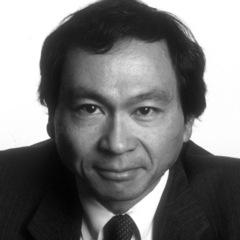
Francis Fukuyama
Francis Fukuyama

Francis Fukuyama is a distinguished political scientist known for his contributions to political philosophy and international relations. His 1992 book, 'The End of History and the Last Man,' is a seminal work that argues for the culmination of political and ideological evolution in liberal democracy. Born on October 27, 1952, Fukuyama has a Ph.D. from Harvard University and has held academic positions at several leading institutions. more

You May Also Like

“Завжди існуватимуть жадібні люди. Зрештою вони завжди там, де є (чи мали би бути) гроші. Але жадібні люди шахраюватимуть чи дозволятимуть собі недбало ставитися, лише якщо відчуватимуть, що навряд чи їхній злочин помітять, чи суворо покарають за нього.”

“In the civil society, the individual is recognized and accepted as more than an abstract statistic or faceless member of some group; rather, he is a unique, spiritual being with a soul and a conscience. He is free to discover his own potential and pursue his own legitimate interests, tempered, however, by a moral order that has its foundation in faith and guides his life and all human life through the prudent exercise of judgment.”

“Like the Founders, the Conservative also recognizes in society a harmony of interests, as Adam Smith put it, and rules of cooperation that have developed through generations of human experience and collective reasoning that promote the betterment of the individual and society. This is characterized as ordered liberty, the social contract, or the civil society.”

“For the developing world, the past half-century has been a time of recurring hope and frequent disappointment. Great waves of change have washed over the landscape, from the crumbling of colonial hegemonies in mid-century to the recent collapse of Communist empires. But too often, what rushed in to replace the old order were empty hopes-not only in the false allure of state socialism, non-alignment and single-party rule, but also the false glories of romantic nationalism and narrow tribalism, and the false dawn of runaway individualism.”

“By giving full expression to the contradiction between civil society and the state, the French Revolution radically transformed both its terms. To put it differently: dualism was not abolished but, rather, displaced within the space delimited by the two poles of the contradiction. This created a new split between 'man', a member of civil society, and the 'citizen', a member of the state. It is only by 'abstracting' from his condition as man and his insertion into the organization of civil society that the political subject can become a citizen and make his entry into the political community: it is only as a 'sheer, blank individual' who accepts the fact that the political is divorced from the social that he can take part in the life of the state, which is based on the freedom and equality of its citizens. (...) The political state is 'abstract' in the sense suggested by the etymology of the word; it appears as the residue or the 'precipitate' of the constitutive movement by means of which civil society transcends its own limits to attain political existence, while leaving its internal differences intact, or, rather, transforming them into mere 'differences of social life' 'without significance in political life'. The state is incapable of substantially affecting the contents of civil society, for it is, precisely, a product of civil society's abstraction from itself.”

“Why do we romanticize the dead? Why can't we be honest about them? Especially moms. They're the most romanticized of anyone. Moms are saints, angels by merely existing. NO ONE could possibly understand what it's like to be a mom. Men will never understand. Women with no children will never understand. No one buts moms know the hardship of motherhood, and we non-moms must heap nothing but praise upon moms because we lowly, pitiful non-moms are mere peasants compared to the goddesses we call mothers.”

“One sister may internalize the message and say, “Okay, I will show you what I can do and how worthy I am” and become an overachiever and a perfectionist. The other sister may internalize this message of inferiority and give up, feeling that she can’t make the grade anyway; she becomes an underachiever or engages in some kind of lifelong self-sabotage.”

“We forget in order to survive our childhoods, when we are totally dependent on our parents' goodwill; but to recover from such childhoods, we must begin by remembering-the bad and the good.”